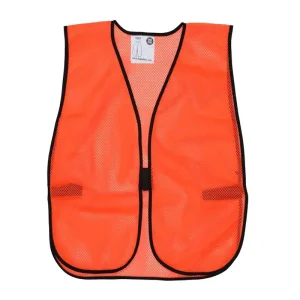
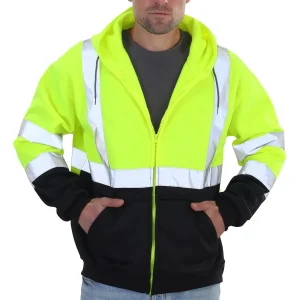
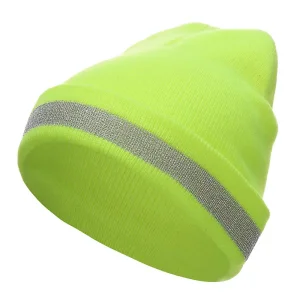
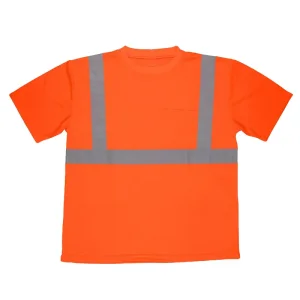
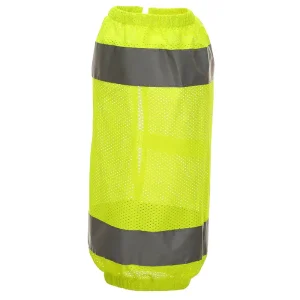
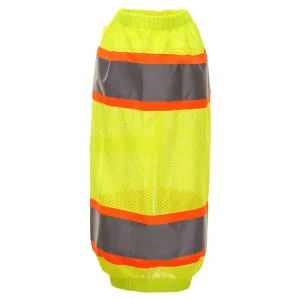
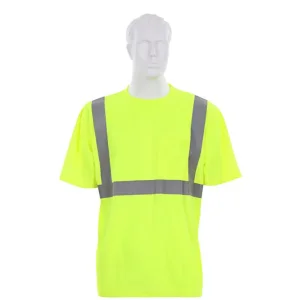
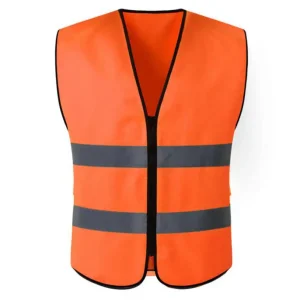
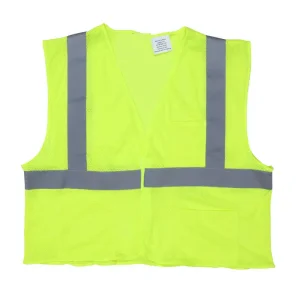
Select from our premium line of certified fluorescent vests, technical outerwear, and reflective accessories manufactured to rigorous global safety specifications.
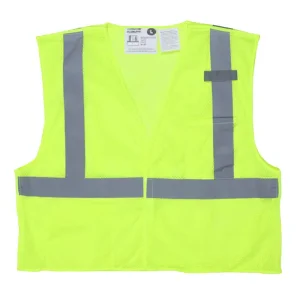
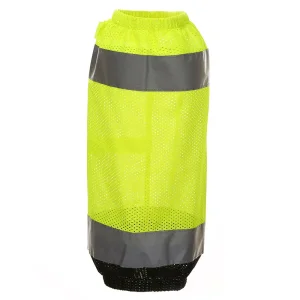
As global infrastructure projects accelerate and occupational health and safety (OHS) regulations grow increasingly stringent across North America, Europe, and the Asia-Pacific region, the demand for enterprise-grade High-Visibility (Hi-Vis) protective apparel has experienced structural growth. Modern security forces, traffic enforcement officers, construction crews, and industrial personnel require garments that bridge the gap between photometric performance, ergonomic durability, and climate adaptiveness.
Regulatory mandates such as OSHA (Occupational Safety and Health Administration) in the United States and EU PPE Regulation 2016/425 have made ANSI/ISEA 107 and EN ISO 20471 non-negotiable standards. Procurement officers no longer evaluate Hi-Vis gear solely on price; compliance integrity and photometric longevity are critical parameters.
China accounts for over 65% of global retroreflective apparel manufacturing. The industrial cluster in Zhejiang Province—specifically Yongkang and Jinhua—serves as the primary operational backbone, integrating micro-glass bead synthesis, fluorescent dye formulation, automated textile weaving, and precision assembly under unified quality ecosystems.
The market is rapidly transitioning from commoditized safety vests to specialized high-function workwear. Growth vectors include multi-hazard protective suits (antistatic, flame-retardant, arc-flash rated), climate-controlled active gear, and integrated smart wearables designed for automated asset tracking and lone-worker monitoring.
High-visibility safety apparel relies on two complementary photometric phenomena: daytime fluorescence and nighttime retroreflection. Achieving true compliance requires exacting chemical composition, weave structure, and glass-bead refraction indexes.
Fluorescent materials convert invisible ultraviolet (UV) light waves into visible light, amplifying daytime perception. According to ANSI/ISEA 107-2020 and EN ISO 20471:2013+A1:2016, base fabrics must achieve strict chromaticity coordinates $(x,y)$ and minimum luminance factors ($Y$):
Nighttime conspicuity is achieved using retroreflective materials engineered with high-refractive-index glass beads ($n \ge 1.93$) or microprismatic cube-corner structures. Light rays from approaching vehicle headlights are bounced directly back to the light source:
| Garment Class | ANSI/ISEA 107 (US Standard) Base Fabric | ANSI/ISEA Reflective Tape Surface Area | EN ISO 20471 (EU Standard) Base Fabric | EN ISO 20471 Reflective Tape Surface Area | Target Operational Work Zones |
|---|---|---|---|---|---|
| Class / Level 1 | 0.14 m² (217 sq. in.) | 0.10 m² (155 sq. in.) | 0.14 m² | 0.10 m² | Parking attendants, warehouse personnel, low-speed traffic (< 25 mph / 40 km/h) |
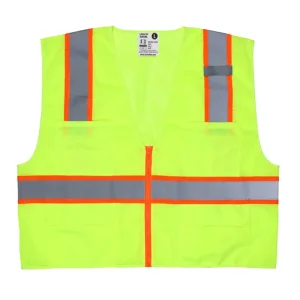
| Class / Level 2 | 0.50 m² (775 sq. in.) | 0.13 m² (201 sq. in.) | 0.50 m² | 0.13 m² | Roadway construction, utility crews, airport ground staff, security patrols (< 50 mph) |
| Class / Level 3 | 0.80 m² (1240 sq. in.) | 0.20 m² (310 sq. in.) | 0.80 m² | 0.20 m² | High-speed highways (> 50 mph), extreme hazard zones, severe weather emergency response |
Professional safety apparel must be custom-tailored to the operational environments of diverse industrial sectors. Sub-optimal fabric selection can lead to premature wear, thermal stress, or safety non-compliance.
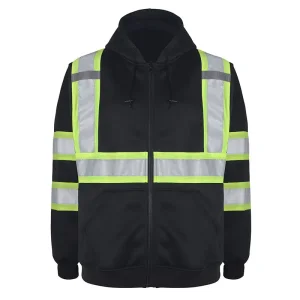
Requires tactical black/navy two-tone accents combined with Class 2 or Class 3 fluorescent orange/lime panels. Features include quick-release breakaway seams to prevent entanglement, radio mic tabs, and high-tenacity 300D polyester Oxford shell fabrics.
Requires combined-performance garments providing flame retardancy (ISO 11612), anti-static conductive grid threads (EN 1149-5), and high-visibility properties. Essential for refineries, drilling rigs, and chemical transfer stations.
Demands non-magnetic zipper closures, high-breathability bird's-eye mesh structures for extreme heat endurance, and 360-degree vertical plus horizontal microprismatic retroreflective striping for tarmac vehicle headlight angles.
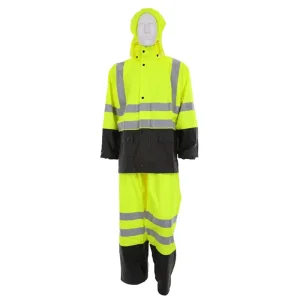
Demands heavy-duty PU-coated waterproof rain suits, abrasion-resistant reinforced kneepads/elbows, and industrial wash resilience capable of undergoing 50+ laundering cycles at 60°C without loss of retroreflectivity.
The high-visibility safety clothing sector is undergoing a rapid technological evolution. China's top tier manufacturers are integrating smart textiles, sustainable raw materials, and automated production technologies.
Passive retroreflection requires external light sources. Advanced safety apparel now incorporates flexible electroluminescent (EL) strips and wearable micro-LED arrays powered by rechargeable lithium-polymer battery packs for zero-light environments.
Transitioning base fabric supply chains to 100% recycled polyethylene terephthalate (rPET) derived from post-industrial water bottles, achieving GRS (Global Recycled Standard) certification while maintaining EN ISO 20471 colorfastness standards.
Embedding flexible UHF RFID chips and passive Bluetooth Low Energy (BLE) beacons into vest seams, enabling automated job-site roll calls, geotagging safety zone breaches, and tracking worker fatigue telemetry in hazardous areas.
Microencapsulated Phase-Change Materials (PCM) integrated into inner linings to dynamically absorb body heat during high exertion and release heat in freezing climates, mitigating cold-stress and heat-stroke risks for workers.
For international brand owners, procurement teams, and governmental agencies, sourcing safety garments from China requires a robust Quality Assurance (QA) workflow to eliminate compliance risks and ensure batch-to-batch consistency.
Every batch of fluorescent dyed fabric undergoes spectrophotometric analysis for chromaticity coordinates $(x,y)$ and luminance factor ($Y$) compliance before cutting. Reflective tape lots are tested for retroreflective coefficient ($R_A$) using calibrated optical goniometers.
Custom heat-transfer screen printing or embroidery can reduce the compliant surface area of base fabric. Our CAD engineering team calculates logo placement boundaries to guarantee Class 2 or Class 3 minimum surface area thresholds are never compromised.
Garment samples undergo rigorous physical testing including seam tensile strength tests (ISO 13935-2), dimensional stability after washing (ISO 6330), and colorfastness to artificial light (ISO 105-B02) to guarantee long operational lifespans.
Expert answers to critical procurement, regulatory, and technical engineering inquiries regarding high-visibility safety clothing manufactured in China.
While both standards define minimum background and retroreflective surface areas, ANSI/ISEA 107 (US standard) categorizes garments by Type (O for Off-Road, R for Roadway, P for Public Safety) and Class (Class 1, 2, 3). EN ISO 20471 (European standard) applies strictly to high-risk professional scenarios and divides garments into Class 1, 2, and 3 based solely on surface area performance, regardless of occupational placement type.
Placing oversized non-reflective corporate logos on safety vests reduces the total compliant fluorescent background area. If the remaining background fabric falls below standard specifications (e.g., 0.50 m² for Class 2), the garment loses its certification status. We offer retroreflective heat-transfer printing or utilize non-critical zones (such as black trim panels) to preserve full compliance.
Standard glass-bead retroreflective tapes sustain retroreflective performance ($R_A \ge 100 \text{ cd/(lx}\cdot\text{m}^2)$) up to 25 domestic wash cycles at 40°C. For heavy industrial use, we utilize industrial-wash glass bead or microprismatic tapes engineered with specialized polyurethane backing resins, capable of enduring 50 to 75 industrial wash cycles at 60°C to 75°C under ISO 15797 testing protocols.
Fluorescent yellow-green operates closer to the peak sensitivity of the human eye during photopic (daylight) conditions ($555 \text{ nm}$ wavelength). It provides superior contrast in complex urban settings, high-density traffic zones, and industrial sites. Fluorescent orange-red offers superior visual differentiation against natural background environments such as heavy forest foliage, agricultural landscapes, and snow.
Standard production MOQs for stock-dyed fabric garments start at 500 to 1,000 units per design. Custom color dye-matching (pantone-specific base fabric) or specialized flame-retardant treatments require an MOQ of 2,000 units. Prototype sampling takes 5 to 7 working days, while full-scale mass production orders are typically fulfilled within 25 to 35 days.
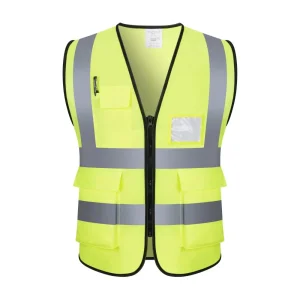
Breakaway vests feature 5-point or 4-point hook-and-loop closure seams located at the shoulders, sides, and front zipper. If the garment is caught by moving machinery, heavy equipment hooks, or involved in a physical altercation, the seams instantly tear open, freeing the worker from entanglement hazards without causing bodily injury.
Discover our full suite of technical rainwear, high-visibility tops, and specialized reflective safety gear for all-weather protection.