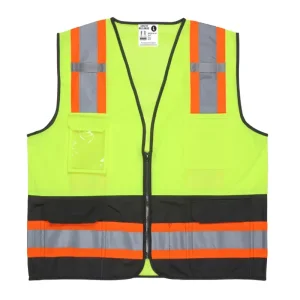
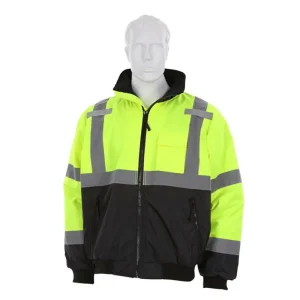
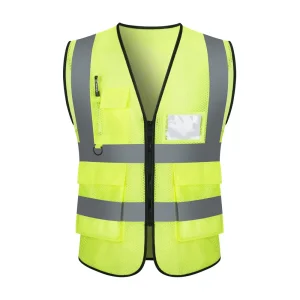
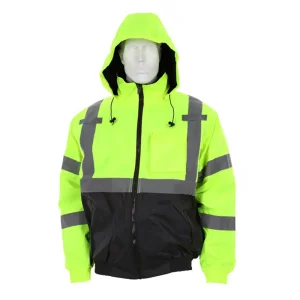
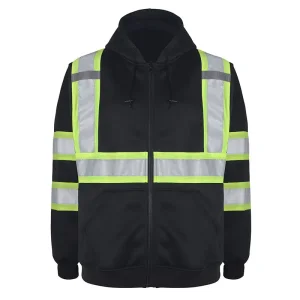
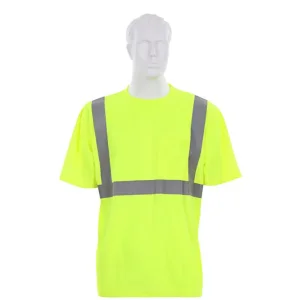
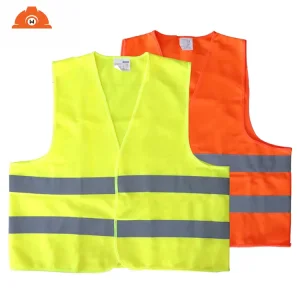
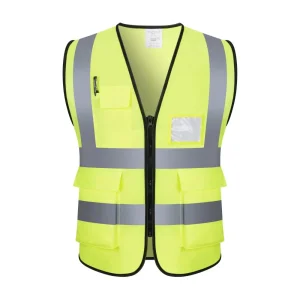
Explore certified reflective vests, sun shields, and technical protective outer garments engineered for global industrial infrastructure.
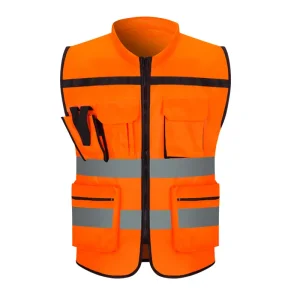
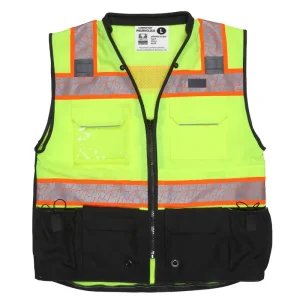
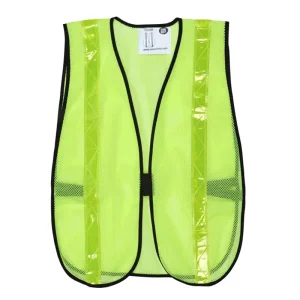
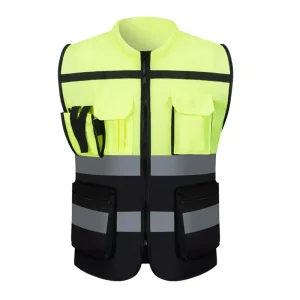
Analyzing macroeconomic drivers, cold-climate occupational health mandates, and supply chain shifts in high-visibility thermal protective wear.
Rapid infrastructure investments across North America, Northern Europe, and East Asia have elevated demand for cold-weather PPE. Industrial workers in sub-zero environments require integrated thermal padding that maintains body heat down to -30°C without restricting physical mobility.
Regulatory agencies such as OSHA (USA), EU Directive 2016/425, and WorkSafe BC have instituted zero-tolerance policies regarding worker visibility in low-light and adverse weather. Modern quilted safety jackets must concurrently satisfy ANSI Class 3 high visibility and EN 342 thermal resistance.
China's vertical integration in textile manufacturing—from synthetic fiber synthesis and polyurethane (PU) lamination to automated ultrasonic quilting—allows Chinese factories to supply world-class safety garments with unmatched cost efficiency and scale reliability.
Deconstructing the multi-layered insulation architecture, hydrostatic waterproof barriers, and retroreflective optical systems engineered in leading Chinese factories.
The exterior layer is constructed from ultra-durable 300D to 600D Polyester Oxford fabric treated with hydrophobic Polyurethane (PU) or Polyvinyl Chloride (PVC) back coatings. This structure yields a Hydrostatic Head Rating exceeding 10,000mm, preventing liquid moisture penetration during heavy rain or melting snow, while maintaining high abrasion resistance against industrial wear.
Internal insulation features premium 160g/m² to 240g/m² synthetic hollow-fiber polyester or 3M Thinsulate™ padding. Utilizing advanced diamond or horizontal channel stitch patterns, the quilting locks thermal fill into micro-chambers. This eliminates thermal bridges (cold spots) and prevents down migration even after 50+ industrial laundering cycles.
Safety compliance relies on retroreflective tape technologies. Premium jackets utilize silver glass-bead tapes (ANSI/ISEA 107 Level 2 compliant) offering retroreflectivity coefficients ($R_A$) above 330 cd/(lx·m²). For marine and extreme precipitation environments, micro-prismatic PVC tapes are heat-welded onto the shell to ensure optimal light reflection when submerged or wet.
The interior layer utilizes 190T anti-static taffeta or anti-pilling polar fleece. Integrated with breathable microporous membranes (Moisture Vapor Transmission Rate MVTR > 5,000 g/m²/24h), the lining facilitates body heat vapor evacuation during heavy exertion while retaining trapped warm air.
| Component Layer | Material Specification | Performance Metric | International Compliance |
|---|---|---|---|
| Outer Shell Layer | 300D / 600D Polyester Oxford + TPU Membrane | Waterproof Rating > 10,000 mm $H_2O$ | EN 343 Class 3:1 / Class 4:4 |
| Insulation Core | 160-240 GSM Synthetica Thermal Down / Thinsulate | Thermal Resistance ($R_{\text{ct}}$) > 0.35 m²K/W | EN 342 Cold Protection (-30°C) |
| Retroreflective Tape | High-Gloss Silver Micro-Glass Bead / Micro-prismatic | Retroreflective Coefficient $R_A > 330 \text{ cd}/(\text{lx}\cdot\text{m}^2)$ | ANSI/ISEA 107-2020 / EN ISO 20471 |
| Inner Lining | 190T Anti-Static Taffeta or 220GSM Polar Fleece | Breathability MVTR > 5,000 g/m²/24h | OEKO-TEX Standard 100 Certified |
Understanding regional high-visibility and thermal protection standards to ensure seamless customs clearance and jobsite compliance.
Specifies garment classes based on worker risk exposure. ANSI Class 3 represents the highest level of coverage for high-speed roadways (>50 mph) and harsh winter conditions. Requires a minimum of 1,240 square inches of fluorescent background fabric and 310 square inches of retroreflective striping.
Harmonized European standard for high-visibility garments. Class 3 jackets require full torso and arm coverage with 360-degree horizontal band bands. Fluorescent Yellow, Fluorescent Orange-Red, and Fluorescent Red must fall strictly within certified chromaticity coordinates.
Canadian and Australasian standards mandating specific retroreflective geometric layouts—including the distinctive "X-back" reflective configuration for workers facing away from moving machinery, coupled with Class 3 thermal insulation parameters.
Tailoring quilted high-visibility jackets to withstand domain-specific environmental stressors and operational requirements.
High-speed traffic vectors require Class 3 visibility. Jackets incorporate dirt-hiding black bottom panels, heavy-duty storm flaps, and radio mic tabs to handle heavy vehicular wind gusts and grease exposure.
Workers operating continuously in -25°C refrigerated distribution centers require flexible, low-bulk quilting with inner stretch storm cuffs and fleece-lined high collars to eliminate wind chill.
Exposed to saltwater spray and storm winds. Outfitted with heavy PVC waterproof seams, micro-prismatic reflective tape, non-corrosive nylon zippers, and integrated harness access points.
Demands high tear-strength 600D Oxford fabric with reinforced elbow patches, fire-retardant outer coatings, and heavy-duty D-ring attachment points for fall-arrest lanyards.
From automated CAD fabric nesting to spectro-photometric tape testing—how top-tier Chinese safety clothing factories deliver consistent compliance.
Advanced computerized nesting software optimizes pattern layout on rolls of 300D Oxford fabric, maximizing fabric utilization efficiency up to 94.5% while laser cutters ensure millimeter-precise panel alignment.
High-capacity multi-needle stitching machines generate uniform diamond quilting patterns. High-stress critical seams receive hot-air taped sealing to ensure 100% waterproof performance across stitch punctures.
Finished garments undergo rigorous AQL 1.5/2.5 sampling inspections. Quality checks cover wash durability (50+ cycles at 60°C), seam burst strength, retroreflectivity decay rates, and zip cycle endurance.
Expert answers regarding custom manufacturing, minimum order quantities (MOQ), compliance certifications, and technical specifications.
For extreme sub-zero working conditions (-15°C to -30°C), we recommend a minimum insulation density of 180 GSM to 240 GSM synthetic polyester padding, paired with a 300D Oxford shell and fleece lining. This combination delivers a thermal resistance ($R_{\text{ct}}$) rating above 0.38 m²K/W, meeting EN 342 Cold Protection requirements while maintaining compliance with ANSI Class 3 background fabric area thresholds.
We utilize premium glass-bead or micro-prismatic tapes engineered with flame-bonded backing adhesives. The tape is applied using double-needle lockstitching or heat-transferred under precise temperature-pressure-time controls (160°C at 4 bar for 15 seconds). This guarantees performance through 50 industrial wash cycles at 60°C without reflective loss or edge peeling.
Yes. To preserve waterproof integrity, we offer two solutions: (1) Applying heat-transfer vinyl logos using heat presses before inner quilting, or (2) Utilizing internal zipper access ports ("decoration zippers") that allow embroidery heads to patch only the outer shell while heat-sealing the backside with waterproof sealing tape post-embroidery.
Stitch quilting uses traditional needle threads to form diamond baffles, offering classic durability and aesthetic appeal. Ultrasonic quilting uses high-frequency sound waves to fuse synthetic fabric layers without needle punctures. Ultrasonic quilting eliminates stitch micro-holes, providing superior windproof/waterproof performance and eliminating fiber migration.
Our standard OEM/ODM MOQ is 500 units per style/colorway. Pre-production counter samples are developed within 7-10 working days. Bulk mass production lead times typically range between 30 to 45 days post-sample approval and deposit confirmation, supported by our 6,000 m² facility with 150+ skilled sewing technicians.
Yes. We specialize in custom tape layouts compliant with Canadian CSA Z96-15 regulations. This includes the mandatory back "X" configuration, full waist band, and dual arm bands using certified 5cm retroreflective silver tape across fluorescent yellow-green or orange-red background fabrics.
We offer Global Recycled Standard (GRS) certified 100% Recycled Polyester (rPET) outer shells and linings woven from post-consumer plastic bottles. Combined with PFC-free water repellent finishes (DWR), buyers can achieve ESG sustainability targets without compromising ANSI/EN ISO protective standards.
We utilize high-density vacuum compression packaging that reduces cargo volume by up to 45%, significantly lowering ocean freight costs. Our high-resilience hollow-fiber filling is specially engineered to regain 98% of its original thermal loft within 24 hours of opening the master shipping carton.
Explore our extended range of ANSI Class 2 & Class 3 insulated work outerwear, hoodies, and reflective safety vest configurations.