Factory-direct compliant safety jackets, reflective vests, and insulated workwear engineered for global industrial standards.
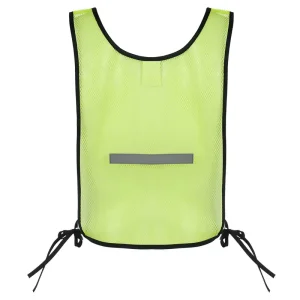
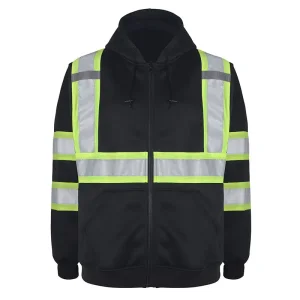
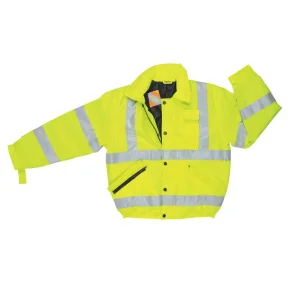
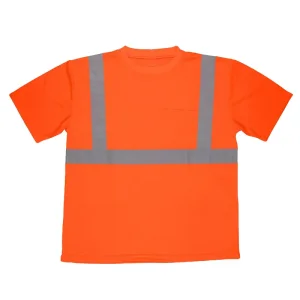
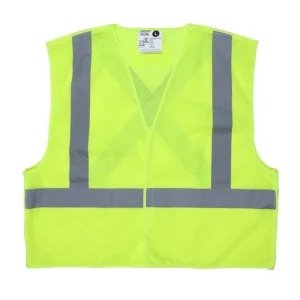
Analysis of international safety mandates, thermal barrier technologies, and economic sourcing drivers from Chinese manufacturing ecosystems.
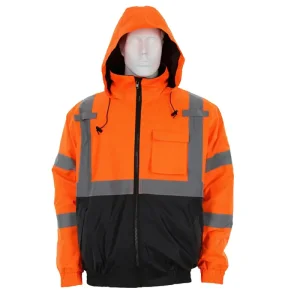
The global demand for high-visibility quilted jackets has undergone a fundamental transformation over the past decade. No longer viewed as basic personal protective equipment (PPE), high-visibility thermal outerwear now represents a critical intersection of advanced material science, industrial occupational health compliance, and cold-climate ergonomic design. In regions such as North America, Northern Europe, and East Asia, stringent enforcement of standards like ANSI/ISEA 107-2020 and EN ISO 20471:2013+A1:2016 has elevated the requirement for certified workwear across municipal construction, logistics, railway maintenance, and offshore energy projects.
Quilted hi-vis jackets specifically address the complex biophysical challenges faced by outdoor industrial workers during autumn and winter months. The primary thermal mechanism relies on trapping still air within synthetic micro-denier polyfill structures sandwiched between a durable, fluorescent outer shell (typically 300D to 600D Oxford Polyester with polyurethane coating) and a low-friction lining fabric. By incorporating diamond, channel, or sonic-welded quilt patterns, manufacturers prevent the migration and sagging of thermal insulation—ensuring homogeneous heat retention across the torso, chest, and arms without restricting mechanical range of motion.
Modern quilted jackets are engineered to satisfy simultaneous compliance profiles: Class 3 high visibility, EN 342 cold resistance, and EN 343 waterproof/breathability standards, minimizing inventory complexity for multinational corporate buyers.
Centered in industrial zones like Yongkang and Jinhua, Chinese apparel manufacturing hubs provide unparalleled vertical integration—from polyester filament extrusion and retroreflective bead glass coating to automated computer-guided stitching.
Incorporating state-of-the-art glass-bead retroreflective tapes (such as 3M Scotchlite or specialized OEM equivalents) that retain >330 cd/lx/m² performance even after 50 intensive industrial laundry cycles at 60°C.
Inside the thermal dynamics, waterproof membranes, and glass-bead retroreflectivity that define high-performance industrial workwear.
| Garment Layer | Material Specification | Functional Performance Metric | Regulatory Standard Reference |
|---|---|---|---|
| 1. Outer Protective Shell | 300D / 600D Oxford Polyester with DWR Finish | Hydrostatic head resistance > 10,000mm H2O | EN 343 Class 3/4 Waterproofing |
| 2. Weatherproof Membrane | Microporous TPU / PU Lamination | Water vapor permeability (Ret < 15 m²·Pa/W) | EN 343 Breathability Matrix |
| 3. Thermal Quilted Core | 160-220 GSM Thermo-bonded Polyester Fiberfill | Thermal resistance rating (Clo value 0.380–0.450) | EN 342:2017 Thermal Insulation |
| 4. Anti-Static Inner Lining | 190T Taffeta with Conductive Carbon Threading | Surface resistivity < 2.5 × 10⁹ Ω | EN 1149-5 Anti-Static Safety |
| 5. Retroreflective Strips | High-Index Micro Glass-Bead Banding (5cm width) | Initial Coefficient of Retroreflection > 450 cd/lx/m² | ANSI/ISEA 107 / EN ISO 20471 |
High-visibility performance relies on two distinct optical phenomena: daytime luminance (chromaticity) and nighttime retroreflection. The outer shell fabrics utilize specialized fluorescent dyes—typically Fluorescent Yellow-Green (Coordinates x: 0.387, y: 0.610), Fluorescent Orange-Red (x: 0.610, y: 0.390), or Bright Red—to convert invisible ultraviolet solar radiation into visible light wavelength bands. This ensures maximum visual contrast against natural background environments (such as green foliage or gray concrete) under overcast, misty, or dawn conditions.
Conversely, retroreflection becomes operative in zero-light scenarios when illuminated by vehicle headlights. High-index glass beads (refractive index n ≥ 1.93) embedded in a durable resin matrix capture incoming light beams, focusing them onto a mirrored back hemisphere, and directing the reflected ray bundle back to the motorist's eye vector. Precision stitching of 2-inch (50mm) wide reflective tape across shoulders, torso, and arms creates recognizable human silhouette patterns (biomotion identification), allowing drivers to react up to 3 seconds faster compared to static non-reflective shapes.
Understanding regional certification imperatives for wholesale buyers and procurement directors across North America, Europe, and Asia-Pacific.
Classifies garments into Type O (Off-road), Type R (Roadway), and Type P (Public Safety). Quilted hi-vis jackets predominantly target Type R Class 3, requiring a minimum of 1,240 sq. inches of background fabric and 310 sq. inches of retroreflective material, ensuring full torso and limb coverage.
Establishes three technical performance classes. Class 3 requires 0.80 m² of background fluorescent material and 0.20 m² of reflective striping. Jackets manufactured for European markets must also maintain strict colorfastness to light, washing, perspiration, and dry cleaning.
Mandates high-visibility orange garments specifically for trackside workers on the UK rail network. The fabric chromaticity must fall precisely within the high-contrast orange spectrum to prevent color confusion with railway signaling apparatus.
Customized workwear specifications tailored to demanding operational environments across diverse industry sectors.
Designed for cold-storage warehouses (-25°C). Features fleece-lined storm collars, thermal knit cuffs, and dual zipper storm flaps to seal in body heat during extended forklift operations.
Engineered for high-speed highway maintenance. Class 3 full-body visibility combined with tear-away breakaway zippers prevents snag hazards near heavy machinery and moving traffic.
Features heavy-duty 600D Oxford polyurethane-coated shells with taped waterproof seams, providing resistance against salt spray, heavy downpours, and wind chill effects.
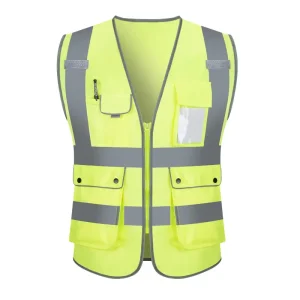
Equipped with multi-functional pocket arrays, radio mic tabs, transparent ID badge holders, and removable quilted linings for flexible year-round operational use.
Inside our 6,000 m² state-of-the-art facility: From raw fabric quality control to automated assembly lines.
As a leading high-visibility safety clothing manufacturer based in Yongkang, Zhejiang, Yongkang Wow Safety Products Co., Ltd. operates an integrated 6,000 square meter production center staffed by over 150 highly skilled apparel technicians. Our facility processes bulk orders for international safety equipment distributors, government tenders, and corporate brand accounts, maintaining strict adherence to ISO 9001 quality management standards.
Automated vector nesting software maximizes fabric yield while computerized laser cutters guarantee millimeter-precise panel dimensioning across all size gradients (S to 7XL).
To eliminate water penetration through needle stitch holes, our waterproof quilted rain jackets utilize automated hot-air seam taping machines to apply waterproof TPU tape over every interior seam.
Every raw material batch undergoes rigorous testing: spectroradiometer chromaticity verification, hydrostatic head water column pressure testing, and tear-strength testing prior to stitching production.
Technical, commercial, and regulatory answers for procurement managers and safety equipment buyers.
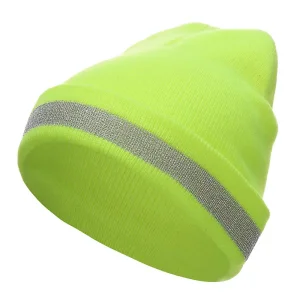
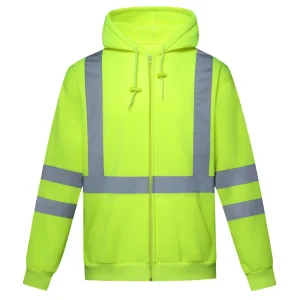
Explore our extended catalog of high-visibility hats, headwear, thermal sweatshirts, and specialized protective accessories.