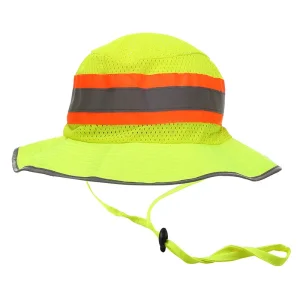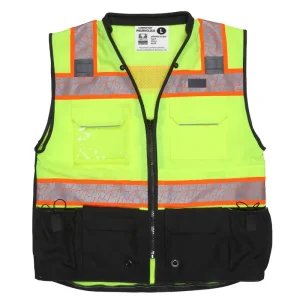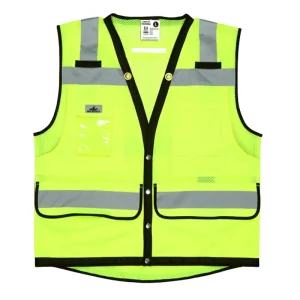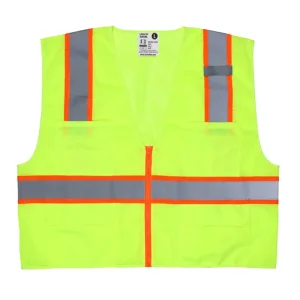
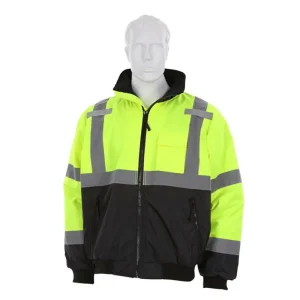
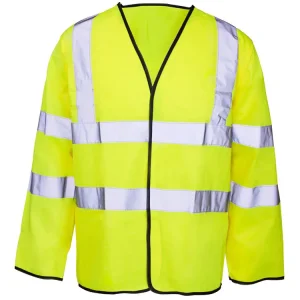
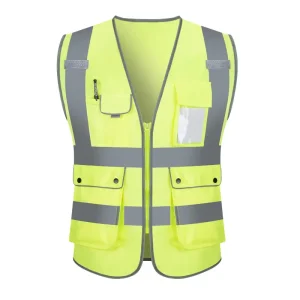
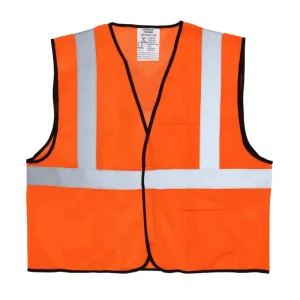
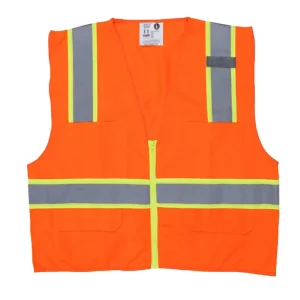
Navigating the transition from commodity workwear to high-specification, ergonomic, and regulatory-certified safety garments across global industrial markets.
In contemporary industrial procurement, the terminology "Nice Safety Vest" signifies far more than aesthetic appeal. Enterprise safety officers, government infrastructure authorities, and commercial distributors have systematically upgraded their specifications from single-use, low-grammage promotional vests to high-durability, multi-functional workwear platforms. China's manufacturing ecosystem—centered heavily in high-precision textile hubs like Zhejiang and Jiangsu—has responded by introducing advanced warp-knitting, micro-prismatic glass bead retroreflection, and automated pattern stitch assembly.
Modern global procurement requires garments that withstand rigorous environmental stress: extreme ultraviolet exposure, industrial laundering chemicals, mechanical abrasion in civil engineering projects, and dynamic kinetic strains. A premium China safety vest manufacturer integrates technical material engineering directly into bulk production lines, ensuring that every batch meets rigid photometric and chromaticity thresholds established by international standards bodies.
| Evaluation Metric | Commodity / Budget Safety Vests | Engineering-Grade "Nice" Safety Vests | Regulatory Impact |
|---|---|---|---|
| Base Fabric Composition | 60–80 gsm low-density polyester mesh | 120–160 gsm Tricot Warp-Knit or Breathable 3D Bird-Eye Mesh | EN ISO 20471 Tensile & Tear Strength Compliance |
| Retroreflective Tape | Standard CPL < 100 glass bead tape | 3M™ Scotchlite™ / High-CPL Micro-Prismatic (CPL > 330–500) | ANSI/ISEA 107-2020 Level 2 Visibility at 1,000+ feet |
| Closure Mechanisms | Flimsy single-stitch hook-and-loop | Heavy-duty resin zippers, reinforced 5-point breakaway snaps | Prevents snag hazards around moving machinery |
| Laundering Longevity | 5–10 home washes before reflective decay | 25–50+ industrial laundering cycles (ISO 6330 certified) | Reduces Total Cost of Ownership (TCO) by 40% annually |
| Ergonomic Pocket Layout | 1 or 0 simple pockets | 9+ structured pockets: Dual mic tabs, clear ID, tablet sleeve | Optimizes field productivity for surveyors & engineers |
Understanding chromaticity coordinates, retroreflective coefficients ($R_a$), and synthetic textile physics required for high-risk work environments.
The core safety function of a reflective vest relies on return-reflectivity—redirecting incident light rays back toward light sources such as vehicle headlights. Premier China factories utilize high-index glass microbeads ($n \ge 1.93$) encased within aluminum-backed polymer layers, or advanced micro-prismatic optical structures.
The coefficient of retroreflection ($R_a$), measured in $\text{cd}/(\text{lx}\cdot\text{m}^2)$, must exceed 330 for Class 2 compliance under observation angles of $0.2^\circ$ and entrance angles of $+5^\circ$. Premium vests produced for European and North American markets maintain an $R_a \ge 450$, delivering extreme long-range recognition at distances up to 350 meters.
Daytime visibility requires base fabrics to convert invisible ultraviolet radiation into visible light wavelengths through fluorescence. Certified materials must fall strictly within defined chromaticity boxes ($x,y$ coordinate charts) specified by ANSI 107 and EN ISO 20471.
Key performance indicators include the Luminance Factor ($\beta$). High-visibility yellow background materials require a minimum $\beta \ge 0.70$, whereas high-visibility orange-red requires $\beta \ge 0.40$. Top suppliers deploy solution-dyed polyester yarns treated with UV-stabilizers to prevent color degradation and fading after prolonged sun exposure.
Verifying certification validity, factory quality management systems, and ethical manufacturing standards before contract execution.
Defines garment classifications based on operational environment:
Categorizes high-visibility clothing into three risk classes based on surface area coverage:
Regulates high-visibility safety garments for Australian and New Zealand working environments:
When selecting a factory in China for bulk high-visibility vest orders, procurement managers must audit factories beyond basic price quotes. Ensure the manufacturer holds valid certificates from accredited third-party labs such as SATRA, SGS, TÜV Rheinland, or UL.
Tailoring safety vest configurations to meet strict operational requirements across diverse global industrial sectors.
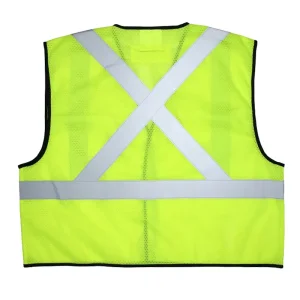
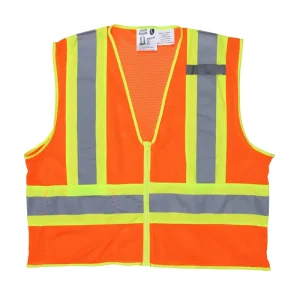
Requires high-contrast ANSI Class 2 or Class 3 vests featuring 3-inch two-tone tape layouts (lime base with silver reflective center). Outfitted with heavy-duty zipper closures, radio mic tabs, and 5-point breakaway mechanisms to prevent entanglement in asphalt machinery.
Focuses on extreme breathability and mobility. Utilizes lightweight 110gsm cooling mesh with minimal pockets to eliminate snagging on pallet racking and conveyor belts. High-speed custom branding (screen-printed company logos on back).
Demands specialized Flame-Retardant (FR) and Anti-Static (ESD) modacrylic fabrics certified to NFPA 2112 and EN ISO 11612. Features non-conductive plastic zippers or covered press-stud closures, with back pass-through slots for fall arrest harnesses.
Review of CAD drawings, fabric grammage (GSM), reflective tape specifications, Pantone color matching, and pocket sizing.
Sample production within 3–5 days. Spectrophotometer and photometric lab testing performed prior to client approval.
Computer-controlled laser fabric cutting, automated pocket stitching, in-line quality gates, and AQL 2.5 final inspection.
Integrating active illumination, IoT biometric telemetry, and eco-certified recycled textiles into next-generation high-visibility safety clothing.
Passive retroreflective tape relies on external ambient light sources. Next-generation "nice" safety vests are incorporating flexible, washable active LED piping and electroluminescent (EL) strips powered by rechargeable lithium-polymer micro-packs. This guarantees 360-degree illumination even in total darkness without vehicle headlamp illumination.
Furthermore, industrial IoT integrations now feature wearable biometric sensors embedded in vest linings to measure worker core temperature, heart rate, and ambient toxic gas levels—transmitting real-time safety alerts to site supervisors via Bluetooth mesh or LoRaWAN networks.
Global ESG mandates are driving demand for sustainable PPE procurement. Leading Chinese suppliers are transitioning to recycled Polyethylene Terephthalate (rPET) yarns derived from post-consumer plastic bottles. Producing a high-visibility rPET vest conserves approximately 45% energy and reduces carbon emissions by 52% compared to virgin polyester.
Eco-friendly water-repellent coatings (PFC-free) and bio-degradable reflective tape backing options are becoming standard specifications for European corporate procurement programs aiming for net-zero carbon footprints.
Expert answers to critical technical, regulatory, and logistical questions regarding China safety vest sourcing.