Direct factory wholesale solutions compliant with ANSI/ISEA 107-2020 and EN ISO 20471 safety benchmarks.
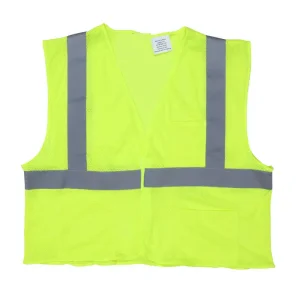
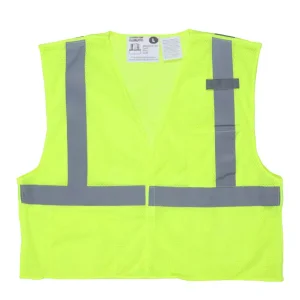
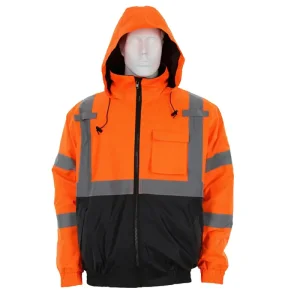
Analyzing global demand, thermal stress mitigation, and regulatory shifts in high-risk industrial safety clothing.
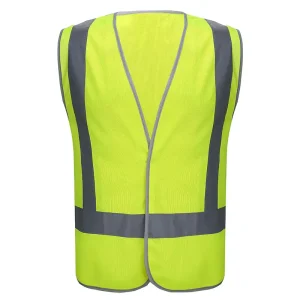
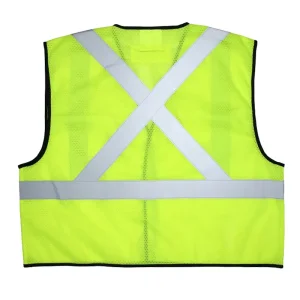
In modern industrial operations—spanning mega-infrastructure civil engineering, oil and gas logistics, mining, container ports, and high-speed rail construction—the high-visibility workwear sector has undergone a fundamental structural shift. Historically, high-visibility outerwear was dominated by heavy, non-permeable synthetic jackets that provided visual compliance but induced severe thermal strain on field personnel. Today, global enterprise procurement teams and EHS (Environmental Health & Safety) officers are increasingly sourcing from specialized China Lightweight Safety Jacket suppliers who can synthesize high-performance photometric reflectivity with advanced textile thermodynamics.
Heat stress is no longer merely a comfort concern; it is a critical workplace liability. According to international occupational safety health studies, excessive body heat retention directly correlates with reduced cognitive focus, elevated heart rates, and a 24% increase in workplace accidents. The modern lightweight safety jacket engineered in China’s textile technology hubs (specifically Yongkang, Zhejiang) utilizes ultra-low GSM (Grams per Square Meter) polyester mesh substrates, engineered micro-perforations, and high-tensile warp-knitted structures. These advances allow maximum airflow ($> 450 \text{ mm/s}$ air permeability rating) while preserving structural integrity under high-wear industrial environments.
Reduces microclimate heat buildup beneath protective garments by up to 1.8°C compared to conventional 300D Oxford jackets, significantly reducing heat exhaustion risks in high-ambient environments.
Integrates certified retroreflective tape delivering photometric coefficients ($R_A$) exceeding $330 \text{ cd/lx}\cdot\text{m}^2$, exceeding minimum ANSI Class 2 and Class 3 thresholds for 360-degree visibility.
Leveraging China's fully integrated industrial cluster in Zhejiang, allowing tier-1 B2B buyers to achieve consistent batch-to-batch quality, customized OEM branding, and competitive TCO scaling.
A granular breakdown of fiber density, retroreflective glass bead coatings, and dielectric fastener engineering.
Evaluating lightweight safety jackets requires understanding the material science engineered into every yard of fabric. A common procurement misconception is that "lightweight" equates to reduced durability. Leading China Lightweight Safety Jacket suppliers utilize specialized polyester yarn extrusion techniques, combining micro-denier filament yarns into high-density warp-knitted patterns or ripstop weaves. This process yields superior tensile tear resistance ($> 150 \text{ N}$ along warp and weft) while maintaining structural fabric weights between 100 GSM and 150 GSM.
| Performance Parameter | Standard Heavy Workwear (300D Oxford) | Advanced China Lightweight Jacket (120GSM Mesh/Warp) | Engineering Benefit & Target Application |
|---|---|---|---|
| Fabric Weight (GSM) | 220 – 300 g/m² | 100 – 140 g/m² | 50% mass reduction; eliminates shoulder fatigue over 12-hour shifts. |
| Air Permeability | 50 – 100 mm/s | 450 – 680 mm/s | 6x higher air exchange rate; ideal for summer construction & indoor warehouse hubs. |
| Retroreflective $R_A$ | 250 – 330 cd/(lx·m²) | 380 – 500 cd/(lx·m²) | Superior low-light night-time return signal under vehicular headlight beams. |
| Industrial Wash Cycle Rating | 25 Cycles @ 40°C | 50+ Cycles (ISO 6330 Standard) | Maintains fluorescent chromaticity and retroreflectivity across long service life. |
| Electrical Hazard Protection | Standard Metallic Zippers | Dielectric Resin Zippers & Hook-Loop | Eliminates arc-flash conductivity points for utility and electrical maintenance crews. |
The base fabric of any certified lightweight safety jacket must maintain strict chromaticity coordinates ($x, y$) defined by ANSI/ISEA 107 and EN ISO 20471. Fluorescent Lime (Yellow-Green) and Fluorescent Orange-Red are engineered using specialized high-lightfastness disperse dyes. This ensures the garment achieves the mandatory minimum luminance factor ($\beta \ge 0.70$ for Fluorescent Yellow; $\beta \ge 0.40$ for Fluorescent Orange) under Daylight Illuminant D65, maintaining high daytime contrast against varied backgrounds.
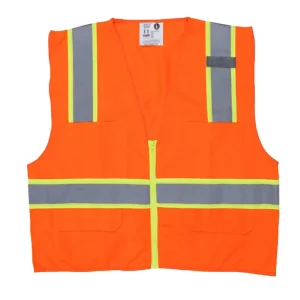
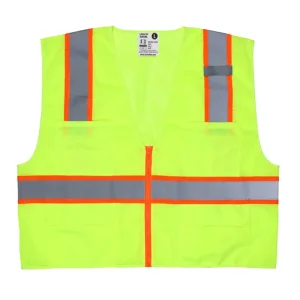
The reflective stripes utilized on premium China lightweight safety jackets feature wide-angle retroreflective glass beads embedded in a flexible polymer matrix, or micro-prismatic vinyl films. Light incident on the tape is reflected directly back toward the light source (such as a vehicle's headlights) regardless of the angle of approach. High-tier options feature 3-inch or 4-inch contrast tape configurations (e.g., lime substrate with a central 2-inch silver reflective band) to provide enhanced spatial recognition for machinery operators.
For high-risk environments such as electrical utility work, railway yards, or automated sorting facilities, lightweight safety jackets are equipped with dielectric resin zipper closures. Unlike metal zippers, non-conductive dielectric fasteners do not act as electrical conduits in arc-flash scenarios. Furthermore, 5-point breakaway construction (utilizing hook-and-loop fasteners at the shoulders, sides, and front zip) allows the garment to detach instantly if caught in moving machinery or conveyors, preventing worker entanglement.
Critical metrics for enterprise supply chain leads, safety distributors, and OEM brand specifiers.
Verify that supplier test certificates (SATRA, Nelson Labs, UL, or TÜV Rheinland) specifically match the exact production fabric weight (GSM) and retroreflective tape batch, ensuring compliance with ANSI Class 2/3 or EN ISO 20471.
Inspect seam construction standards. Premium suppliers execute 8 to 10 stitches per inch (SPI) with double-needle chain stitching on critical load points, preventing seam slippage during active movement.
Ensure the vendor offers compliant silk-screen printing, heat-transfer vinyl, or reflective logo placement. Logo printing must fit designated non-reflective zones to avoid violating certified minimum reflective surface area rules.
When procuring high-visibility safety clothing at scale, unit purchase price is only one component of the total cost equation. A low-cost garment that degrades after 10 industrial wash cycles incurs a replacement cost rate 3x higher than a high-durability lightweight safety jacket engineered for 50+ wash cycles. Enterprise buyers should evaluate suppliers based on garment replacement lifecycles, freight efficiency (lightweight garments reduce air/sea freight weight by up to 40%), and worker compliance compliance rates.
15+ years of specialized safety apparel manufacturing expertise delivering world-class OEM/ODM solutions.
Headquartered in Yongkang, Jinhua City, Zhejiang Province—China’s premier manufacturing hub for protective gear—Yongkang Wow Safety Products Co., Ltd. operates a 6,000 square meter modern production facility staffed by over 150 skilled sewing operators, pattern makers, and quality assurance inspectors. Over 15+ years of dedicated growth, Wow Safety has evolved into a fully integrated manufacturer serving B2B safety distributors, governmental agency tenders, and private label brands in more than 50 countries worldwide.
Equipped with automated computerized fabric laser-cutting tables, automatic pocket-setting machinery, and high-speed multi-head reflective tape heat bonding presses to ensure millimeter precision.
Our facility includes an internal testing room with retroreflectometers, hydrostatic head testers, wash endurance testing vessels, and color spectro-photometers to verify every raw material batch.
Our facility adheres to BSCI, SMETA, and ISO 9001 quality management standards, offering transparent social compliance audits and full supply chain traceability for ethical procurement.
Smart wearable tech integration, circular economy recycled polymers, and active illumination systems.
Beyond passive retroreflection, next-generation lightweight jackets incorporate ultra-flexible, washable LED fiber optics powered by rechargeable micro-lithium cells, guaranteeing visibility even in total darkness without external headlight illumination.
To support global corporate ESG (Environmental, Social, and Governance) mandates, Chinese fabric mills are shifting toward Global Recycled Standard (GRS) certified 100% recycled polyester yarn spun from post-consumer plastic bottles, matching virgin polyester in tensile strength and colorfastness.
Embedding flexible UHF RFID chips into jacket hems allows construction firms and industrial laundries to track garment wash counts, inspect safety assignment records automatically, and eliminate inventory shrink in large workforce deployments.
Ensuring seamless market access across North America, Europe, Australia, and Asia-Pacific.
Sourcing lightweight safety jackets internationally requires adherence to localized safety standards. Premium China manufacturers engineer products to satisfy multi-jurisdictional criteria:
Complementary reflective workwear, rainwear, hats, and specialized enterprise apparel.
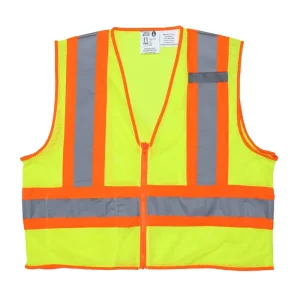
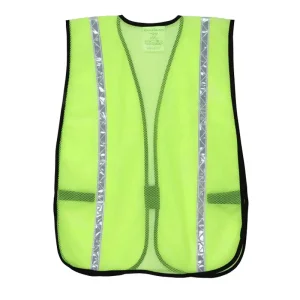
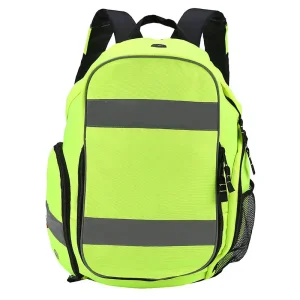
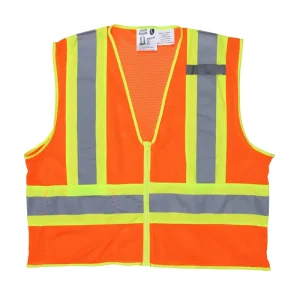
Expert answers addressing user intent, technical specifications, and commercial purchasing terms.
Lightweight safety jackets utilize engineered low-GSM synthetic fabrics (typically 100 to 140 g/m² warp-knitted polyester mesh or micro-ripstop) compared to traditional 220–300 g/m² woven Oxford materials. They provide drastically higher air permeability ($> 450 \text{ mm/s}$), lowering wearer core body temperatures while maintaining full compliance with ANSI/ISEA 107 Class 2/3 and EN ISO 20471 photometrics.
Reputable manufacturers like Yongkang Wow Safety Products Co., Ltd. partner with accredited third-party testing labs (such as SATRA, TÜV, and UL). Samples from every fabric dye lot and reflective tape batch are subjected to spectrophotometric color analysis, tensile tear testing, and retroreflectometer measurements to ensure strict adherence before export.
Standard factory MOQs typically start at 500 to 1,000 units per style for customized colors, size runs, and private label logo printing. Mass production lead times generally range between 20 and 35 days post-sample approval, supported by Yongkang’s robust localized textile supply chain.
Yes. Custom silk-screen printing, heat transfer, or embroidery can be added, provided the design complies with certification guidelines. ANSI and EN ISO standards specify minimum background fabric surface areas; logos must be placed within dedicated non-reflective areas or accounted for during initial garment pattern engineering.
Options include dielectric non-conductive resin zippers for electrical utilities, anti-static grid fibers woven into the substrate, and 5-point breakaway hook-and-loop construction designed to detach safely under mechanical snag loads.