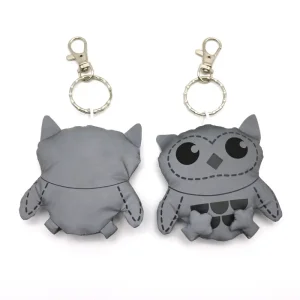
Explore initial certified safety workwear solutions engineered for extreme environmental performance.
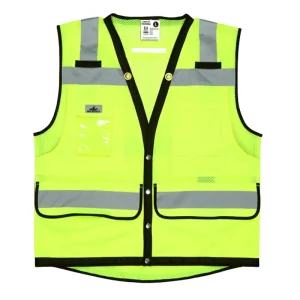
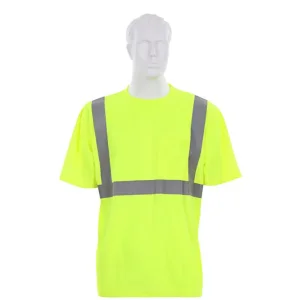
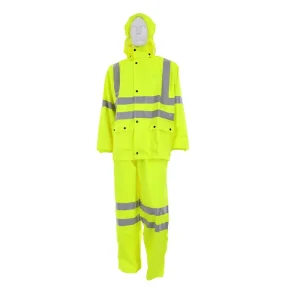
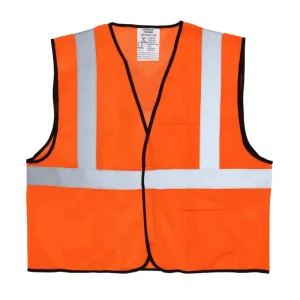
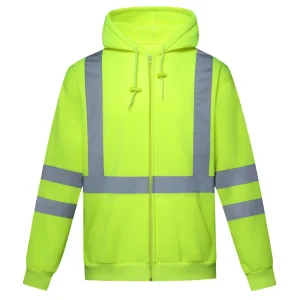
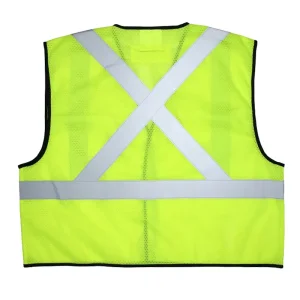
Understanding the photometric requirements, material engineering, and global compliance standards of China-manufactured reflective jackets.
In modern industrial safety, municipal infrastructure, logistic management, and high-hazard work environments, high-visibility workwear serves as the primary physical layer of personal protective equipment (PPE). Among these, jackets with reflective stripes produced by China manufacturers represent a critical segment of the international safety supply chain. As global workplace safety mandates—such as OSHA standards in North America and Directive 89/686/EEC in Europe—enforce rigorous visual detection requirements, procurement managers must navigate complex engineering specifications, certified material compositions, and manufacturing compliance protocols.
Information Gain Insight: Modern high-visibility jackets are no longer mere fluorescent outer shells. They are complex multi-layer ergonomic systems incorporating retroreflective micro-glass bead technology or micro-prismatic optics, engineered to bounce incoming light back to its source ( vehicle headlights) with minimal luminance decay, achieving minimum retroreflection coefficient values ($R_A$) exceeding $330\text{ cd}/(\text{lx}\cdot\text{m}^2)$.
Utilizing high-index glass bead coatings (refractive index $n \ge 1.90$) and micro-prismatic arrays engineered for extreme wide-angle angularity performance.
Integrated PU/PVC back-coatings with fully taped waterproof seams, providing hydrophobic barriers capable of withstanding hydrostatic heads $>10,000\text{ mm } \text{H}_2\text{O}$.
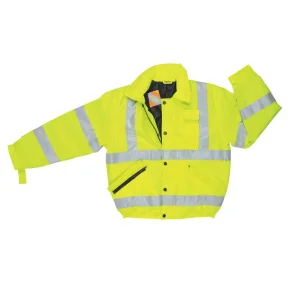
Multi-layered quilted taffeta linings, polar fleece inserts, and detachable 3-in-1 inner bomber jacket configurations designed for sub-zero working conditions.
Inside the industrial clusters of Zhejiang (Yongkang / Jinhua) and their ecosystem of raw material synthesis, advanced sewing automation, and cost efficiencies.
China's safety apparel manufacturing hubs in Zhejiang bring together fluorescent yarn spinning, weaving, fabric dyeing, PU/PVC chemical coating, retroreflective tape slitting, and garment assembly within a 50-kilometer radius. This geographic concentration drastically cuts raw material lead times and enables rapid OEM/ODM prototyping within 3-5 days.
Modern Chinese safety jacket factories employ hot-air seam sealing equipment, automatic programmable pattern sewers, and laser cutting tables. This guarantees micro-precise stitching, eliminates water leakage along seam points, and maintains high tensile strength along critical load-bearing stress points of heavy winter bomber jackets.
By leveraging high-capacity automated production lines, manufacturers like Yongkang Wow Safety Products Co., Ltd. can process high-volume B2B purchase orders with minimum unit cost structures without compromising ANSI/EN ISO standard compliance. Buying direct from Chinese factories eliminates intermediary markups, boosting importer margins by 25-40%.
Leading China factories operate strictly under ISO 9001 quality management systems and maintain active SMETA, BSCI, or OEKO-TEX Standard 100 social and chemical compliance certifications. This allows global brands and institutional tender bidders to source with zero risk of non-compliance.
A definitive technical breakdown of international high-visibility safety clothing specifications required for global commercial distribution.
High-visibility jackets featuring reflective stripes must meet precise area and performance metrics for both fluorescent background materials and retroreflective bands. Below is an engineering comparison matrix across key global safety jurisdictions:
| Standard Region | Class Level | Min. Fluorescent Area | Min. Reflective Tape Area | Primary Target Industry / Application |
|---|---|---|---|---|
| EN ISO 20471 (EU) | Class 3 | $\ge 0.80\text{ m}^2$ | $\ge 0.20\text{ m}^2$ | High-speed motorways, railway construction, airport tarmac crews. |
| EN ISO 20471 (EU) | Class 2 | $\ge 0.50\text{ m}^2$ | $\ge 0.13\text{ m}^2$ | Municipal utility work, delivery drivers, parking attendants. |
| ANSI/ISEA 107-2020 (US) | Type R Class 3 | $\ge 1240\text{ in}^2$ ($0.80\text{ m}^2$) | $\ge 310\text{ in}^2$ ($0.20\text{ m}^2$) | Roadway construction zones with traffic speeds exceeding 45 mph. |
| ANSI/ISEA 107-2020 (US) | Type R Class 2 | $\ge 775\text{ in}^2$ ($0.50\text{ m}^2$) | $\ge 201\text{ in}^2$ ($0.13\text{ m}^2$) | Traffic control, surveyors, construction work within temporary traffic zones. |
| CSA Z96-15 (Canada) | Class 2 / Class 3 | $\ge 0.50\text{ m}^2 / 0.80\text{ m}^2$ | X-Back Configuration Required | Canadian heavy civil construction, oil & gas, mining sectors. |
| AS/NZS 1906.4 (AU/NZ) | Class F/R | Fluorescent + Retroreflective | High UV Resistance Required | Australian mining, rail network operations, desert worksites. |
The retroreflective stripe is the most vital functional element of any safety jacket. During low-light, night, or fog conditions, reflective tape performance determines the wearer's recognition distance. Suppliers in China utilize premium glass bead reflective films (such as 3M Scotchlite, Avery Dennison, or high-grade domestic equivalents like Daoming) that achieve initial retroreflective coefficient values ($R_A$) of over $500\text{ cd}/(\text{lx}\cdot\text{m}^2)$ under standard entrance and observation angles ($\alpha = 0.2^\circ, \beta_1 = 5^\circ$).
Furthermore, international standards require reflective tape on jackets to maintain high reflectivity after repetitive industrial washing cycles. Premium China suppliers certify their reflective stripes for 25 to 50+ wash cycles at 60°C according to ISO 6330 laundering test methods, ensuring long product lifespans for industrial buyers.
Customizing high-visibility jacket designs for diverse working environments and hazardous operational demands.
Requires EN ISO 20471 Class 3 long-sleeve bomber jackets with continuous 360-degree reflective body bands and double arm striping. High tear-resistance 300D Oxford Polyester outer shells withstand abrasion against rough machinery.
Heavy-duty insulated parka jackets equipped with thick 200gsm silk-like cotton padding, fleece linings, storm hoods, and anti-freeze flexible PU reflective tapes that remain pliable down to -30°C.
Flame-retardant (FR) high-vis jackets combining Modacrylic / Cotton fabrics with FR-treated silver glass-bead reflective tape compliant with EN ISO 11612, NFPA 2112, and anti-static EN 1149-5 standards.
Multi-pocket tactical surveyor-style jackets featuring radio tabs, ID card windows, mic loops, and breakaway zipper designs to prevent entanglements during emergency response.
Inspecting raw material options, membrane laminates, and retroreflective film structures used in premium China factories.
The foundation of any high-visibility safety jacket is its shell fabric. Leading Chinese factories offer three main fabric categories tailored to climate and usage:
Reflective stripes applied to jackets generally fall into two technical categories:
How global buyers can effectively audit, test, and manage production orders with China safety jacket suppliers.
Define precise pantone colors (Fluorescent Yellow-Green: PANTONE 13-0630 TN; Fluorescent Orange-Red: PANTONE 16-1359 TN). Conduct spectrophotometer colorimetry testing under D65 standard illuminant conditions to ensure chromaticity coordinates ($\mathbf{x}, \mathbf{y}$) fall within standard target zones.
Perform hydrostatic pressure testing (ISO 811) on waterproof seams, tensile strength testing (ISO 13934-1), and retroreflective coefficient ($R_A$) testing using portable retroreflectometers prior to cutting main fabric lots.
Execute final random sampling during bulk assembly adhering to ISO 2859-1 (AQL 1.5 Critical / 2.5 Major / 4.0 Minor). Verify zipper smoothness, logo placement precision, bar-tacking on stress points, and care label accuracy.
How smart textiles, active LED illumination, and circular materials are revolutionizing the high-visibility safety market.
Traditional passive reflective stripes rely entirely on external light sources. Future safety jackets integrate ultra-flexible, washable LED fiber optic strips powered by rechargeable micro-lithium batteries, providing active visibility in pitch-black unlit environments up to 500 meters.
To reduce industrial garment landfill waste, Chinese manufacturers are pioneering mono-material jackets where the outer shell, mesh lining, insulation, and zippers are made entirely from 100% recyclable Polyester (rPET), enabling easy end-of-life chemical recycling without component separation.
Next-generation workwear incorporates lightweight wearable sensors into reflective jacket liners to monitor worker vital signs (heart rate, body temperature) and ambient gas hazards, alerting safety officers wirelessly in real-time during hazardous operations.
Direct answers to technical, regulatory, and logistics queries from B2B buyers and institutional procurement specialists.
The main difference lies in the total area of fluorescent background fabric and retroreflective stripes. ANSI Class 2 garments require at least 775 sq inches of background material and 201 sq inches of reflective tape (typically vest styles). ANSI Class 3 garments require at least 1,240 sq inches of background material and 310 sq inches of reflective tape, featuring full sleeves with reflective stripes around the arms to define a human silhouette in motion.
Reputable China suppliers test reflective tapes using calibrated retroreflectometers measured in $cd/(lx\cdot m^2)$. Standard silver micro-glass bead tapes certified to EN ISO 20471 / ANSI 107 must achieve an initial retroreflection value of at least $330\text{ cd}/(\text{lx}\cdot\text{m}^2)$ at an observation angle of $0.2^\circ$ and an entrance angle of $+5^\circ$.
Yes, professional OEM factories like Yongkang Wow Safety Products offer full customization including silkscreen printing, heat transfer printing, embroidery patches, custom zipper pullers, woven neck labels, and bespoke hangtags. Crucially, factories ensure logo placement does not violate minimum fluorescent surface area requirements mandated by safety standards.
For standard models using stock 300D Oxford fluorescent fabric, typical MOQs range from 500 to 1,000 pieces per color/style. For custom fabric dyeing or specialized Flame-Retardant (FR) formulations, MOQs are around 2,000 pieces. Sample lead times take 5-7 days, while bulk mass production typically requires 30-45 days.
Waterproof safety jackets feature an internal Polyurethane (PU) or TPU membrane bonded to the outer fabric shell. During garment assembly, stitch holes created by sewing needles are sealed on the interior using hot-air polyurethane seam-sealing tape. This prevents water penetration through needle perforations under high hydrostatic pressure.
Explore the secondary collection of certified safety apparel and high-vis gear options.
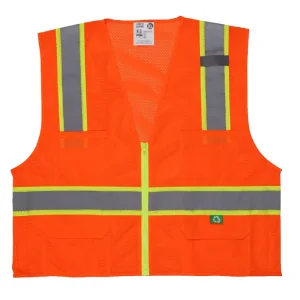
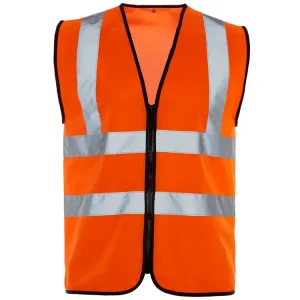
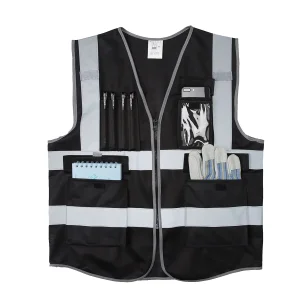
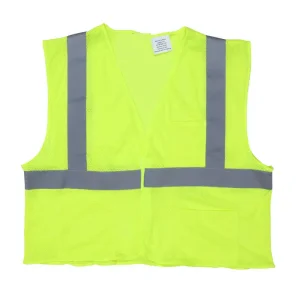
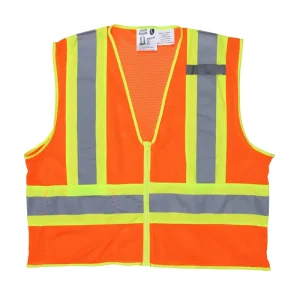
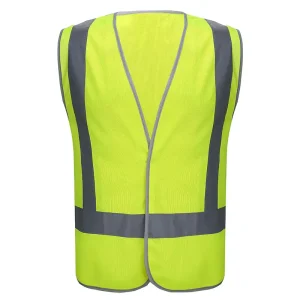
Your premier China OEM/ODM factory partner for certified high-visibility safety clothing, reflective vests, bomber jackets, rainwear, and safety accessories. Operating a modern 6,000 m² plant with 150+ skilled workers, supplying ANSI & EN ISO compliant workwear to global buyers in over 50 countries.