Explore our certified reflective workwear collection engineered in our 6,000 m² Yongkang manufacturing facility. Meeting international ANSI/ISEA 107 and EN ISO 20471 safety benchmarks.
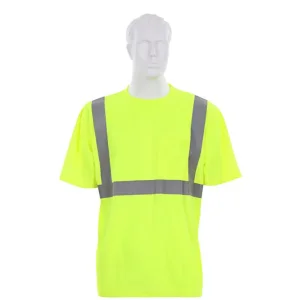
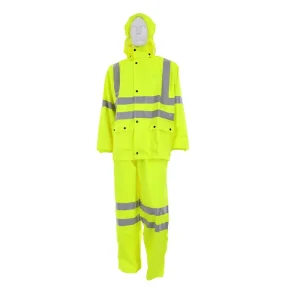
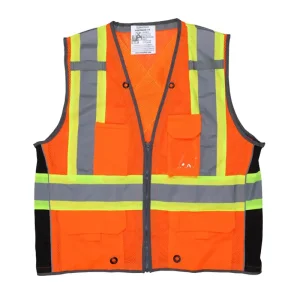
Analyzing compliance shifts, risk mitigation, and macro sourcing strategies across North America, Europe, and Asia-Pacific industrial sectors.
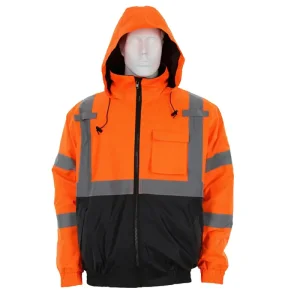
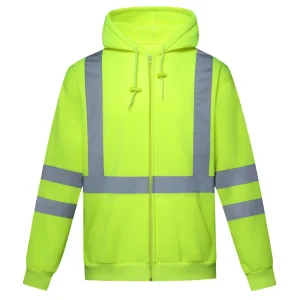
In modern industrial safety management, the demand for cold-weather PPE has transitioned from heavy, restrictive outer coats to versatile, layered thermal garments. Sourcing directors, EPC project procurement officers, and safety apparel brand buyers increasingly seek China High Visibility Sweatshirt Factory partners capable of delivering high-performance fleece garments that combine compliance, ergonomic mobility, and thermal regulation.
High-visibility sweatshirts—encompassing quarter-zip pullover hoodies, full-zip thermal-lined sweatshirts, and flame-retardant fleet jackets—occupy a critical niche in winter workwear fleets. Operating under stringent occupational safety standards such as ANSI/ISEA 107-2020 (Type R Class 2 and Class 3) in the United States, EN ISO 20471:2013+A1 in Europe, and AS/NZS 1906.4:2010 in Australia, these garments act as the primary line of defense against low-visibility strikes in hazardous working environments.
Global corporations face strict penalties for non-compliant jobsite apparel. Partnering directly with audited factories in Yongkang, Zhejiang ensures full traceability of fluorescent background fabrics and glass-bead retroreflective trims certified to international photometer standards.
Bypass multi-layer trading margins by engaging directly with China ODM/OEM factories. Bulk fabric knitting, dye-lot control, and automated laser patterning significantly lower unit procurement costs while maintaining long-term industrial wash durability.
Corporate safety fleets demand brand consistency. Advanced screen printing, thermal vinyl transfer, and direct embroidery allow corporate logos to be placed on designated non-certified print zones without compromising retroreflective surface area requirements.
Deconstructing fleece weight, fluorescent chromaticity coordinates, retroreflective tape technologies, and thermal insulation matrices.
Engineered for harsh ambient conditions, a high-visibility sweatshirt must balance thermal retention with moisture management and continuous daytime and nighttime visibility. At Yongkang Wow Safety Products Co., Ltd., technical execution focuses on three core pillars of textile engineering:
Utilizing 100% spun polyester polar fleece or 65/35 poly-cotton fleece blends, our fabrics are treated with hydrophobic outer finishes and brushed interior piles. This creates trapped dead-air pockets for maximum thermal insulation while expelling worker sweat outward.
Base materials are dyed using high-chromaticity Fluorescent Lime Yellow (Pantone 13-0630 TN) and Fluorescent Orange-Red (Pantone 16-1363 TN). Dyes pass rigorous UV exposure tests (ISO 105-B02), ensuring color intensity does not fade under direct sunlight.
Traditional sewn-on rigid reflective tape causes fabric puckering on heavy fleece. We deploy flexible, microprismatic or glass-bead segmented heat-transfer tape. The segmented gap architecture allows full fleece stretchability and enhanced airflow.
| Parameter / Standard | ANSI/ISEA 107-2020 Class 2 | ANSI/ISEA 107-2020 Class 3 | EN ISO 20471 Class 3 | RIS-3279-TOM (UK Rail) |
|---|---|---|---|---|
| Fluorescent Background Area | ≥ 0.50 m² (775 sq. in.) | ≥ 0.80 m² (1240 sq. in.) | ≥ 0.80 m² | ≥ 0.80 m² (High-Orange) |
| Retroreflective Tape Area | ≥ 0.13 m² (201 sq. in.) | ≥ 0.20 m² (310 sq. in.) | ≥ 0.20 m² | ≥ 0.20 m² (3M/Reflexite) |
| Reflective Coefficient (cd/lux/m²) | ≥ 330 cd/lux/m² | ≥ 330 cd/lux/m² | ≥ 330 cd/lux/m² | ≥ 330 cd/lux/m² |
| Typical Fabric Density | 280 GSM Poly-Fleece | 300-350 GSM Fleece | 320-350 GSM Heavy Fleece | 300+ GSM Poly-Cotton |
| Industrial Wash Cycle Rating | 25 to 50 Wash Cycles | 25 to 50 Wash Cycles | 50 Certified Wash Cycles | 50 Certified Wash Cycles |
Exploring supply chain integration, automated sewing machinery, capacity scalability, and sustainable rPET polyester manufacturing.
China remains the undisputed epicenter of global protective apparel manufacturing. Specifically, the industrial hub surrounding Yongkang and Jinhua City in Zhejiang Province provides an integrated manufacturing cluster that unites yarn spinning mills, dye houses, reflective material producers, and specialized garment assembly factories within a 50-kilometer radius.
Customizing protective apparel configurations for heavy engineering, cold-chain logistics, utilities, and emergency response teams.
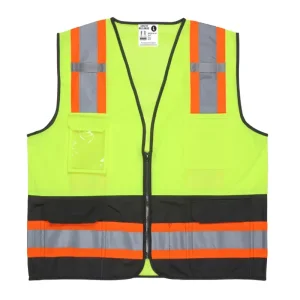
Requires two-tone dirt-masking designs. Dark navy or black fleece on lower body panels and lower sleeves hides grease and mud while maintaining Class 3 compliance on upper torso zones.
Requires thick 350 GSM thermal fleece with anti-pilling outer fleece and quilted thermal sleeve liners. Ergonomic elasticized cuffs retain core heat during prolonged exposure to refrigerated environments.
Demands RIS-3279-TOM compliant high-visibility orange garments, often combined with anti-static carbon fibers and flame-retardant modacrylic fleece treatments to guard against electrical arc flash risks.
A transparent, quality-controlled 6-stage manufacturing protocol designed for international corporate buying teams.
Evaluation of buyer specifications, sizing charts, fabric GSM preferences, and target market safety compliance standards (ANSI/EN ISO).
Fluorescent dye color matching under D65 standard light boxes, followed by physical pre-production sample creation within 5–7 days.
Photometric coefficient verification of reflective tape (glass bead vs microprismatic) to ensure >330 cd/lux/m² luminance ratings.
Computerized cutting, embroidery/screen-printing of corporate logos, and precision twin-needle stitching across production lines.
Comprehensive inline and final inspections checking dimensional stability, seam strength, zipper integrity, and needle detector scans.
Seaworthy/airworthy export packaging with customized barcode shipping marks, customs clearance documentation, and container loading.
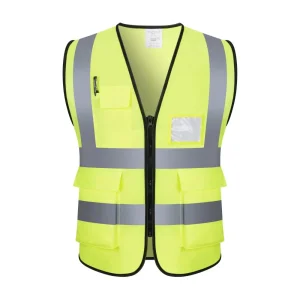
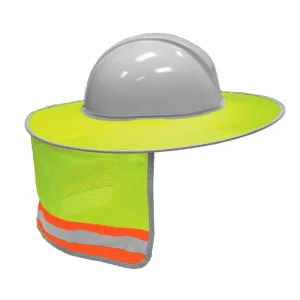
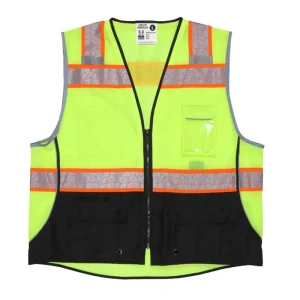
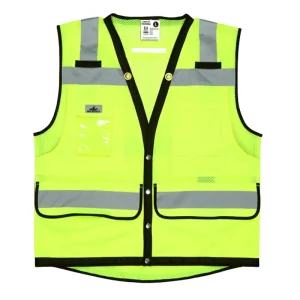
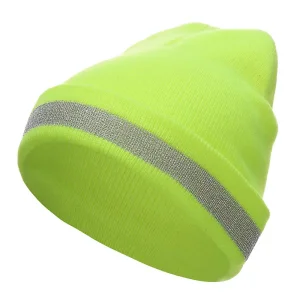
Explore our full line of vests, jackets, rainwear, and reflective safety accessories manufactured for international B2B distributors.
Addressing key technical, compliance, and commercial queries for international PPE buyers and OEM importers.
Our standard factory MOQ is 500 pieces per colorway for customized OEM styles incorporating specific custom fabric GSM, specialized reflective strip configurations, or private label branding. For stock fabric colors (Fluorescent Lime Yellow and Safety Orange), lower trial order volumes (200–300 pieces) can be accommodated.
ANSI Class 2 garments require a minimum of 775 sq. inches of fluorescent background fabric and 201 sq. inches of retroreflective tape, suitable for workers near traffic traveling over 25 mph. Class 3 garments require 1,240 sq. inches of background fabric and 310 sq. inches of reflective tape, featuring full sleeve coverage with 360-degree reflective bands around the arms and torso for high-speed hazardous zones (>50 mph).
Yes. However, logo placement must not encroach upon the minimum required square inches of fluorescent background fabric or obscure retroreflective tape bands. Logos are typically applied via silkscreen printing or heat transfer to designated non-certified print zones on the chest or upper back.
Our high-visibility sweatshirts utilize certified retroreflective tape tested to maintain a coefficient of retroreflection >100 cd/lux/m² after 25 to 50 industrial wash cycles at 40°C/104°F (ISO 6330 standard). Anti-pilling fleece treatments preserve outer garment texture and structural integrity across extended wear.
Our factory operates under strict ISO 9001:2015 quality management system guidelines. We hold independent auditing credentials including BSCI (Business Social Compliance Initiative) and SMETA compliance, ensuring ethical labor practices and environmental standards for global enterprise supply chains.