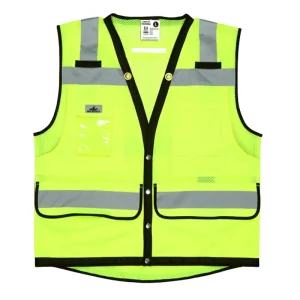
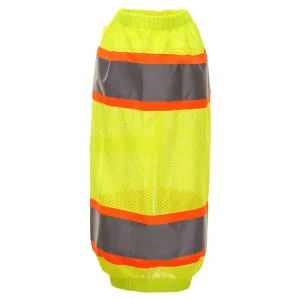
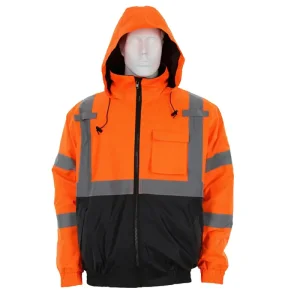
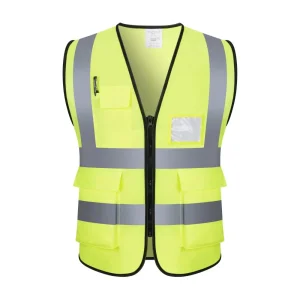
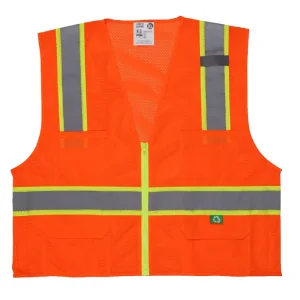
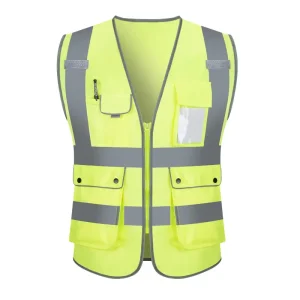
Certified reflective workwear designed with optimized pocket layouts, heavy-duty closure hardware, and high-visibility fluorescent base fabrics.
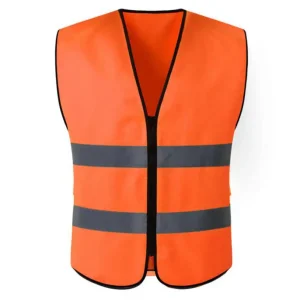
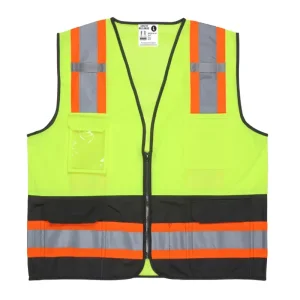
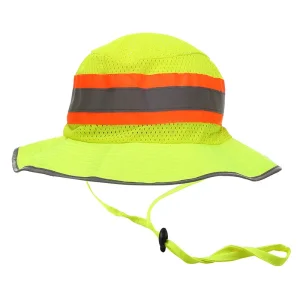
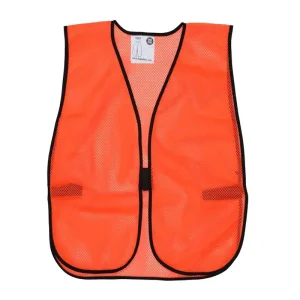
In modern industrial ecosystems, high-visibility personal protective equipment (PPE) has evolved beyond passive visual warnings. Sourcing managers and safety executives require multi-functional gear engineered for high-utility productivity.
Road construction crews and surveyors demand multi-pocket vests capable of stowing mobile terminals, site blueprints, and traffic management meters without causing front-heavy sag or compromising ANSI Class 2/3 reflective surface thresholds.
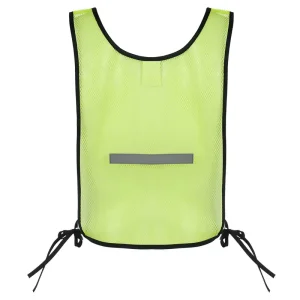
Distribution centers require specialized barcode scanner holsters, clear PVC ID badge pockets for instant access card scanning, and breathable mesh fabrics that maintain thermal comfort in climate-controlled or ambient environments.
Field service technicians require flame-retardant (FR) high-vis pocket garments equipped with dual chest microphone tabs, isolated battery pack pouches, and non-conductive heavy-duty zip closures engineered for extreme durability.
Adding pockets to high-visibility clothing requires precise mathematical calculations. Overloading or misplacing pockets can obstruct retroreflective tape positioning or diminish fluorescent background surface area below legal limits.
Under EN ISO 20471 (Class 2 requires minimum 0.50m² fluorescent material; Class 3 requires 0.80m²), pocket flaps and non-fluorescent reinforced pocket bases subtract from the total visible background fabric area. Premier Chinese factories utilize advanced CAD nesting algorithms to calculate net visible area before stitching, ensuring full regulatory certification.
| Pocket Component | Material Specification | Structural Reinforcement | Target Functional Application |
|---|---|---|---|
| Dual-Tier Chest Pocket | 120gsm Polyester Tricot + Clear PVC Window | Double-stitched bartack at top stress points | ID cards, pens, mic tabs, radio clip retention |
| Gusseted Utility Cargo Pockets | 300D Oxford Fabric with PU Coating | Heavy-duty Velcro flap closure with quick-pull tab | Handheld barcode scanners, small tools, gloves |
| Tablet / Surveyor Notebook Pouch | Reinforced High-Tenacity Knitted Mesh | Concealed heavy-duty resin zipper (#5 YKK equivalent) | 10-inch tablets, site blueprints, field notebooks |
| Internal Storm Pocket | Waterproof Polyester Taffeta | Seam-sealed inner zipper closure | Personal smartphones, passports, critical documentation |
The production of multi-pocket reflective garments requires a balance of automated precision and skilled manual craftsmanship. China's safety clothing manufacturing hubs in Zhejiang integrate end-to-end supply chain advantages.
To maintain symmetry across 5 to 9 pocket configurations on a single vest, automated laser-guided cutters achieve ±0.5mm tolerance. This eliminates pocket misalignment and guarantees exact retroreflective band continuity across zipper seams.
From raw yarn dyeing to final packaging, inline quality inspectors measure chromaticity coordinates via spectrophotometers, verify tensile seam strength, and conduct photometer tests to validate retroreflective coefficient levels (R' > 330 cd/lx/m²).
The next decade of high-visibility safety clothing combines active lighting technologies, IoT connectivity, and sustainable circular textile economies.
Passive retroreflective tape relies on external light beams. Future multi-pocket garments feature embedded flexible LED strip wiring and photoluminescent piping powered by rechargeable micro-lithium battery packs integrated directly into specialized inner storm pockets.
Designing dedicated pockets tailored for gas detectors, biometric heat-stress monitors, and RFID asset-tracking tags. Pockets are padded with impact-resistant EVA foam to shield sensitive electronic equipment during heavy construction work.
Global enterprise buyers are prioritizing ESG compliance. Leading Chinese manufacturers are transitioning to 100% GRS (Global Recycled Standard) certified recycled PET polyester yarns paired with fluorine-free durable water-repellent (DWR) surface treatments.
To mitigate commercial risk when issuing high-volume tenders for high-vis pocket vests, procurement directors should incorporate these technical parameters into their RFQ specifications.
| Evaluation Matrix Parameter | Standard Specification Requirement | Industrial Grade / Premium Option |
|---|---|---|
| Base Fabric Density | 120gsm 100% Warp-Knitted Polyester Tricot | 160gsm Heavy-Duty Breathable Birdseye Mesh |
| Reflective Tape Grade | Glass-Bead High-Gloss Silver Tape (Class 2) | 3M™ Scotchlite™ 8912 / Micro-Prismatic PVC Tape |
| Closure Hardware | Nylon Coil Zipper #5 with Auto-Lock Slider | Heavy-Duty Molded Resin Zipper or Breakaway Snap System |
| Pocket Seam Reinforcement | Standard Single Stitching with Overlock Seams | Reinforced Bartacking (minimum 28 stitches per anchor point) |
| Colorfastness to Washing | ISO 105-C06 Grade 4.0 minimum | ISO 105-C06 Grade 4.5+ (Industrial Wash Compliant) |
Navigating regional safety regulations requires specialized knowledge. A reliable Chinese manufacturer offers tailored design adjustments for target export markets.
Focuses on Type R (Roadway), Type O (Off-Road), and Type P (Public Safety). Demands specific pocket placement that does not break the vertical retroreflective shoulder band continuity.
Enforces strict 360° horizontal band continuity. Require certified Notified Body test reports (Module B/D) for fluorescent background color coordinates and luminance factors.
Specifies distinct rules for Day/Night use, requiring specific retroreflective "H-pattern" or "X-pattern" configurations across the rear panel alongside high UV protection ratings (UPF 50+).
Detailed answers to technical, regulatory, and commercial procurement queries concerning high-vis pocket safety garments.
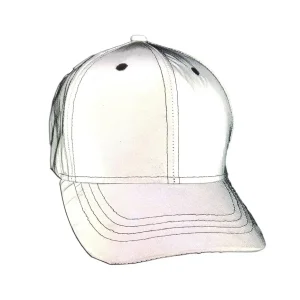
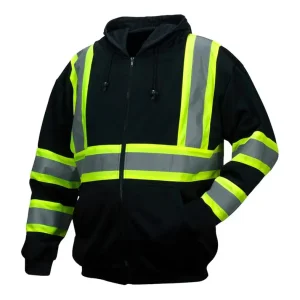
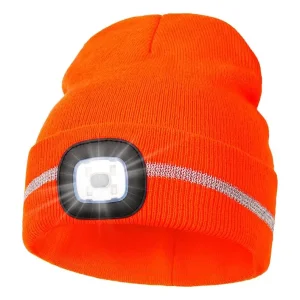
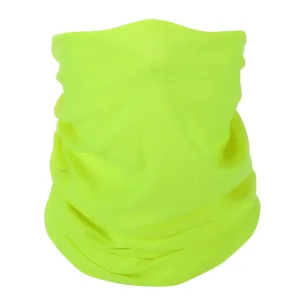
Explore our full range of multi-pocket safety jackets, reflective hoodies, gaiters, and high-visibility headwear crafted for extreme operational environments.