Explore high-performance thermal vests, fleece zip hoodies, and insulated Class 3 jackets certified to international safety standard benchmarks.
Analyzing industrial expansion, regulatory mandates, and supply network evolution driving B2B thermal protective wear procurement.
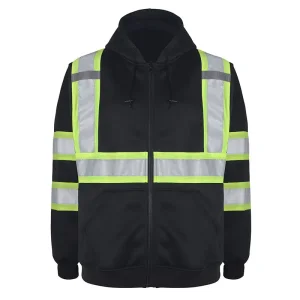
The international market for occupational Personal Protective Equipment (PPE) is experiencing a structural pivot. As infrastructure projects expand into sub-polar, high-altitude, and severe winter climates across North America, Northern Europe, and East Asia, the reliance on high-performance cold-weather workwear has intensified. Sourcing directors and risk-mitigation officers no longer look for standard high-visibility outerwear; they require technically engineered high-vis warm jackets that synthesize thermal insulation, windproofing, waterproof hydrostatic barrier protection, and high-conspicuity retroreflection into a single garment system.
China’s manufacturing landscape, led by specialized clusters such as Yongkang Wow Safety Products Co., Ltd. in Zhejiang, has matured from basic cut-and-sew sub-contracting into an advanced design, fabric engineering, and compliance-testing powerhouse. The modern China high vis warm jacket supplier ecosystem offers robust supply-chain verticalization—integrating raw yarn extrusion, micro-porous membrane lamination, glass-bead/micro-prismatic reflective tape welding, and strict ISO-certified quality assurance processes.
Integrating non-bulky synthetic fill, fleece insulation, and breathable TPU membranes to prevent sweat accumulation while retaining core body heat down to -30°C.
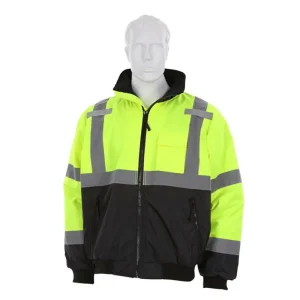
Garments built specifically to pass ANSI/ISEA 107-2020 Type R Class 3, EN ISO 20471 Class 3, and EN 342 thermal resistance audits seamlessly.
Streamlined raw material sourcing and automated automated pattern cutting ensure scalable production outputs capable of handling large-volume municipal and B2B orders.
Understanding layer construction, hydrostatic head ratings, retroreflective physics, and cold-flex durability.
Achieving maximum visibility alongside thermal protection in volatile atmospheric conditions requires a multi-layered composite design strategy. High-vis warm jackets engineered by top-tier Chinese manufacturers utilize modular or laminated multi-layer systems:
The outer shell consists of 300D to 600D heavy-duty Oxford Polyester dyed with fluorescent pigment compounds (Lime-Yellow, High-Visibility Orange-Red). Laminated beneath this shell is a micro-porous Thermoplastic Polyurethane (TPU) or Polyurethane (PU) membrane. This construction yields a waterproof hydrostatic head rating exceeding 10,000 mm H2O while maintaining water vapor permeability (breathability) over 5,000 g/m²/24h, keeping the wearer dry from both external rainfall and sweat condensation.
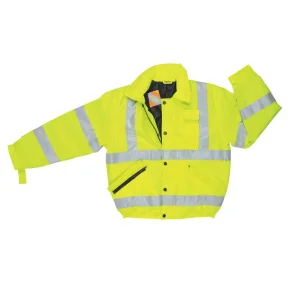
Conspicuity relies on retroreflective technology—either micro-glass beads embedded in a resin backing or prismatic micro-arrays (e.g., 3M Scotchlite or high-grade domestic alternatives). The reflective tapes applied to our jacket collection exhibit retroreflective coefficient values (RA > 330 to 500 cd/lux/m²), far exceeding minimum baseline requirements to guarantee 360-degree visibility under low-beam and high-beam vehicle headlights at distances up to 300 meters.
To combat extreme cold without restricting range of motion, jackets employ specialized thermal liners. Options range from heavy 160–240 gsm quilted polyester polyfill to removable anti-pilling polar fleece inner jackets (3-in-1 modular jackets). The thermal architecture traps still air within micro-chambers, generating thermal insulation values evaluated under EN 342 standards for cold environments.
Water penetration often occurs along stitch lines. Premier manufacturing utilizes high-temperature PU heat-sealing tapes over every stitched seam. Furthermore, high-wear zones—such as cuffs, pocket openings, and lower jacket hems—are reinforced with stain-resistant black accent panels, extending the garment's operational lifespan in dirty industrial environments.
Ensuring seamlessly compliant product entry across North American, European, and Oceanian procurement jurisdictions.
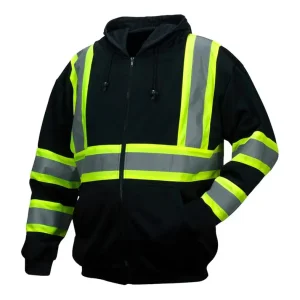
North American Standard: Dictates minimum background fluorescent material (0.78 m² for Class 3) and retroreflective material (0.20 m²). High Vis Warm Jackets rated Class 3 must feature full sleeve retroreflective striping so worker geometry is recognizable across 360 degrees.
European Union Standard: Categorizes garments into Classes 1, 2, and 3 based on visible surface area. Requires strict colorfastness to light, rubbing, laundering, and sweat exposure, as well as rigorous retroreflective tape washing durability (often rated for 25 to 50 industrial wash cycles).
Australian / New Zealand Standard: Specifies Hi-Vis safety garments for high-risk application scenarios. Covers Class Day/Night (D/N) requirements, ultraviolet protection factor (UPF) parameters, and durability against intense solar radiation.
Tailored high-visibility thermal gear engineered for specialized sectors and hazardous operating environments.
Night-shift maintenance crews working adjacent to high-speed traffic rely on Class 3 high-vis warm jackets. Enhanced reflectivity provides long-distance warning to motorists, while windproof construction prevents chill from speeding vehicles.
Dock workers and cold-storage logistics operators face continuous freezing winds, moisture, and heavy machinery movement. Heavy-duty 300D Oxford jackets with waterproof coatings shield workers during grueling shifts.
Remote Arctic and sub-surface mining operations require ultra-durable thermal gear with anti-static and flame-retardant (FR) treatments integrated alongside fluorescent conspicuity panels.
Search-and-rescue teams operating in winter conditions require multi-pocketed utility jackets, radio loops, storm hoods, and high retroreflection for rapid crew identification in blizzards.
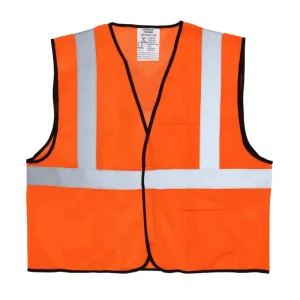
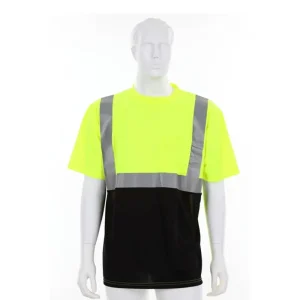
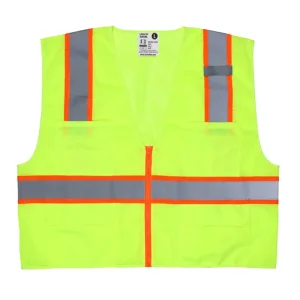
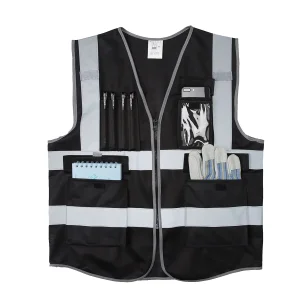
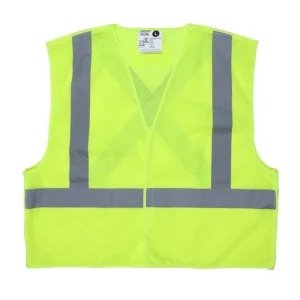
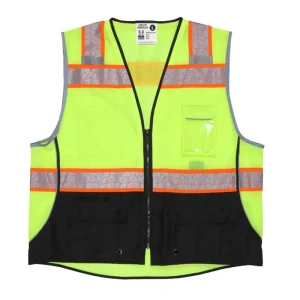
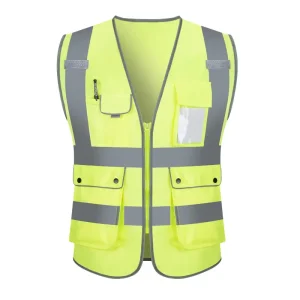
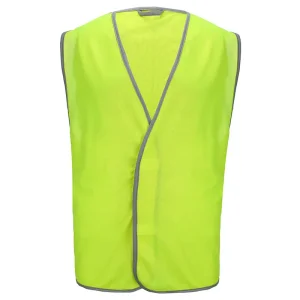
Complete your fleet safety procurement with complementary vests, work shirts, gaiters, and insulated rainwear.
Smart textiles, sustainable recycled polymers, and active heating integrations defining future safety standards.
Migration toward 100% Recycled Polyethylene Terephthalate (rPET) shell fabrics and eco-friendly fluorocarbon-free (PFC-free) DWR coatings, aligning with corporate ESG targets.
Integrating flexible carbon-nanotube heating panels and active LED piping to ensure worker visibility even in total ambient darkness without external light source reflection.
Embedding heat-resistant UHF RFID tags within garment hems to facilitate automated industrial laundry tracking, wash-count auditing, and personnel location tracking.
Essential guidance for procurement managers sourcing high-vis thermal jackets directly from manufacturers in China.