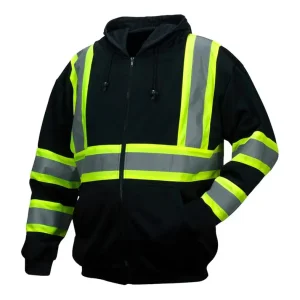
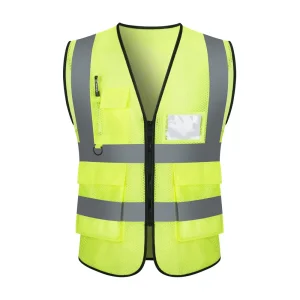
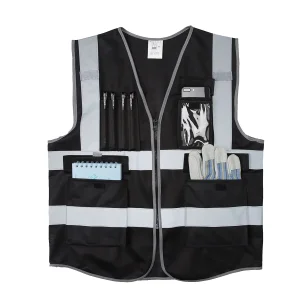
Engineered for global industrial fleets, construction zones, and logistics hubs. Fully compliant with ANSI/ISEA 107-2020 and EN ISO 20471 international standards.
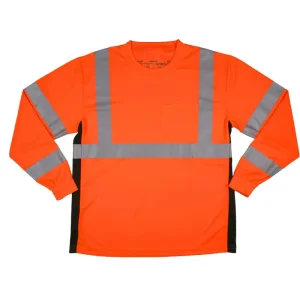
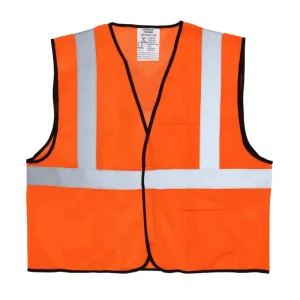
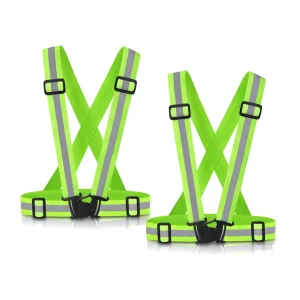
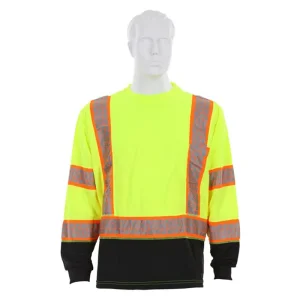
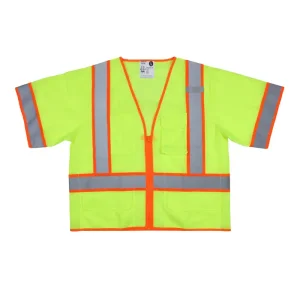
Understanding the shift in industrial Personal Protective Equipment (PPE) from traditional heavy vests to high-performance, moisture-wicking high-visibility T-shirts.
In the contemporary industrial sector, occupational safety regulations have advanced significantly beyond basic compliance. Global safety directives, such as the North American ANSI/ISEA 107-2020 standard, European EN ISO 20471:2013+A1:2016, and Australian AS/NZS 4602.1:2011, require rigorous photometric performance for high-visibility garments. Historically, industrial workers relied on heavy polyester safety vests layered over casual clothing. However, thermal stress, restricted movement, and garment displacement led to compliance failures and elevated heat-stroke risks in high-temperature working environments.
This ergonomic gap led to the technical evolution of Hi Vis Work T-Shirts. Modern high-visibility shirts serve a dual architectural role: offering primary photometric protection (fluorescent base material combined with retroreflective striping) alongside active thermal regulation. Leading China manufacturers, centered in specialized industrial ecosystems such as Zhejiang, have spearheaded this material evolution by pairing high-gauge bird’s-eye polyester knitting with segmented heat-transfer reflective technologies.
Categorized into Type R (Roadway), Type O (Off-Road), and Type P (Public Safety). Requires minimum background fluorescent material (Class 2: 775 sq in; Class 3: 1240 sq in) and retroreflective material placement across sleeves and torso.
Mandates 3-tier classification based on risk levels. Evaluates luminance factor, chromaticity coordinates in dry and wet conditions, and retroreflective coefficient (minimum 330 cd/lx·m² for Class 2 reflective tape).
Enforces Class D/N (Day/Night) split requirements. Prioritizes natural fiber blends (cotton-back polyester) for harsh UV radiation and extreme heat environments common in mining and infrastructure projects.
Detailed breakdown of textile weight, moisture management mechanics, and retroreflective glass-bead vs. micro-prismatic bonding technology.
| Fabric Classification | Composition & Structure | Weight (GSM) | Key Technical Benefits | Optimal Application |
|---|---|---|---|---|
| Bird's-Eye Mesh | 100% Micro-Polyester 75D/144F | 130 - 160 GSM | Maximum airflow, ultra-fast moisture evaporation, non-chafing soft finish | High-heat outdoor construction, summer road maintenance |
| Cotton-Back Interlock | 55% Cotton (Inner) / 45% Poly (Outer) | 180 - 220 GSM | Hypoallergenic skin contact, high breathability, superior structural integrity | Mining operations, heavy machinery manufacturing |
| Piqué Knit (Classic) | 100% Spun Polyester with Wicking Finish | 160 - 190 GSM | Wrinkle-resistant, robust wear resistance, corporate professional appearance | Logistics management, site supervisors, surveying crews |
| FR-Treated Modacrylic Blend | 60% Modacrylic / 38% Cotton / 2% Antistatic | 200 - 240 GSM | Inherent flame retardancy (NFPA 2112/EN 11612), arc flash protection | Petrochemical facilities, electrical utility repair, gas pipelines |
The performance of a Hi-Vis Work T-Shirt during low-light and nocturnal operations depends directly on its retroreflective element. Chinese textile engineers utilize two main technology vectors:
Why leading global safety equipment brands, industrial distributors, and procurement teams source high-visibility apparel directly from Zhejiang's manufacturing hubs.
From raw polyester yarn extrusion, fluorescent dyeing, and specialized knit weaving in Zhejiang to automated laser cutting, heat-seal bonding, and pattern embroidery—every step is executed within a localized 50km industrial cluster, drastically lowering production cycle times.
State-of-the-art facilities utilize computerized automatic spreading machines, digital laser pattern cutters, and ultrasonic reflective tape welding. This guarantees tight dimensional tolerances (±0.5cm) and zero tape peeling during industrial washing.
China factories support flexible minimum order quantities (MOQs), multi-zone corporate silk screening, transfer logo printing, custom Pantone color matching (Fluorescent Yellow-Green 13-0630 TN, Fluorescent Orange-Red 16-1360 TN), and private label packaging.
Customizing fabric weight, sleeve geometry, and reflective configurations for specific industrial hazards and global climates.
Requirement: ANSI Class 3 / EN ISO Class 3 mandatory.
Configuration: Long-sleeve Hi-Vis yellow/orange T-shirts featuring full 360-degree torso stripes and dual arm bands. Uses high-ventilation 140 GSM bird's-eye knit with anti-pilling treatment to handle intense sun exposure and heavy dust.
Requirement: ANSI Class 2 / EN ISO Class 2.
Configuration: Short-sleeve T-shirts with chest utility pockets for comms equipment, pen slots, and mic tabs. Fabrics are treated with anti-static fibers to prevent spark risks around aviation refueling lines.
Requirement: High contrast color-block design.
Configuration: Dark navy or black lower body panel combined with fluorescent upper chest. The dark bottom masks grease, dirt, and scuffs from pallet jacks, extending garment service life and keeping a clean corporate image.
Pioneering innovations shaping the next decade of personal protective workwear manufacturing in China.
Global ESG mandates require sustainable sourcing. China manufacturers lead in converting post-consumer recycled plastic bottles into GRS-certified (Global Recycled Standard) fluorescent yarns, matching virgin polyester in tensile strength and color fastness.
Passive retroreflection requires external light sources (headlights). Next-gen smart Hi-Vis T-shirts integrate flexible, washable Electroluminescent (EL) panels powered by lightweight rechargeable lithium batteries, guaranteeing active 500m visibility in complete darkness.
Integrating silver-ion (Ag+) bio-coatings prevents bacterial odor buildup during 12-hour shifts. Micro-encapsulated Phase Change Materials (PCM) actively absorb heat when skin temp exceeds 33°C, offering active cooling in tropical climates.
Multi-stage quality inspection matrix ensuring seamless customs clearance and certified end-user safety.
To eliminate procurement risks for international buyers, leading China Hi-Vis Work T-Shirt manufacturers enforce comprehensive Quality Assurance (QA) protocols aligned with third-party testing labs (SGS, TÜV Rheinland, SATRA, UL). Every production batch undergoes strict evaluation:
Expert answers to standard B2B procurement queries regarding customization, standards, lead times, and industrial care.
The main difference lies in the total area of background fluorescent fabric and retroreflective tape, as well as garment coverage. Class 2 garments require at least 775 sq inches of background fabric and 201 sq inches of reflective tape (typically short-sleeve designs). Class 3 garments require 1,240 sq inches of background fabric and 310 sq inches of tape, requiring long sleeves with reflective bands around the arms to define a human silhouette in high-speed traffic zones (over 45 mph).
Yes, corporate logos can be screen printed, heat transferred, or embroidered. However, standard rules apply: the logo placement must not cover the mandatory reflective stripes, and the total area of non-compliant logo printing cannot reduce the remaining fluorescent background area below the minimum threshold required by ANSI/ISEA 107 or EN ISO 20471. Manufacturers provide clear "print zone templates" to maintain full compliance.
Segmented reflective tape consists of small retroreflective patterns bonded directly onto elastic knit fabric with micro-gaps. Unlike continuous solid tape (which is rigid and traps heat), segmented tape stretches dynamically with movement, eliminates thread chafing, and allows perspiration vapor to escape through the gaps, greatly boosting worker comfort in hot climates.
Standard commercial grade Hi-Vis T-shirts are certified for 25 domestic wash cycles at 40°C or 60°C. Premium work shirts equipped with high-durability reflective glass-bead tape and color-fast polyester knits can withstand up to 50 industrial wash cycles while maintaining luminance and reflection levels above certification limits.
For OEM orders featuring custom colors, branded neck labels, and tailored sizing, standard MOQs range from 500 to 1,000 pieces per style. Sample approval takes 5 to 7 days, with full mass production completed in 20 to 30 days thanks to integrated localized supply chains.
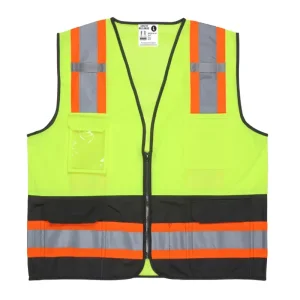
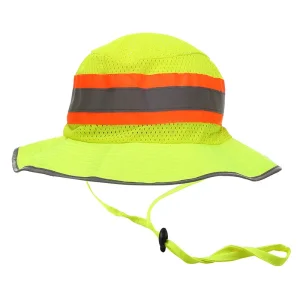
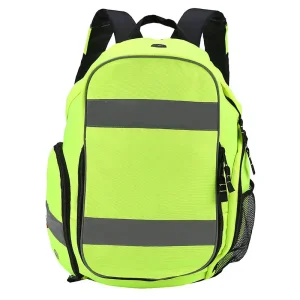
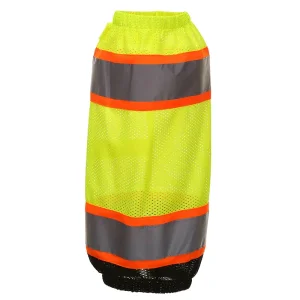
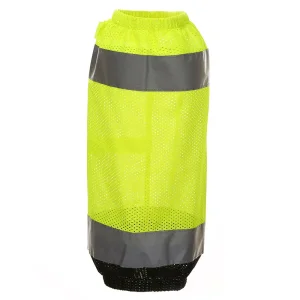
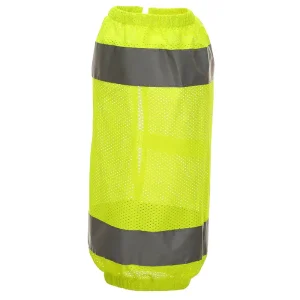
Explore our extended protective line including heavy-duty vests, thermal sweatshirts, weather gaiters, and headwear.