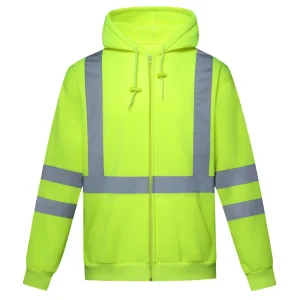
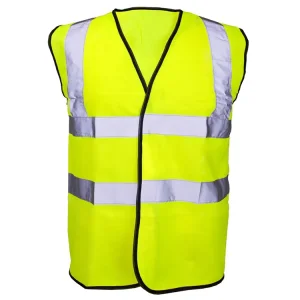
Engineered for high visibility, durability, and compliance with ANSI/ISEA 107 and EN ISO 20471 global standards.
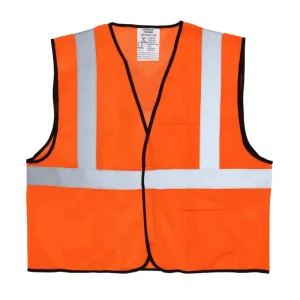
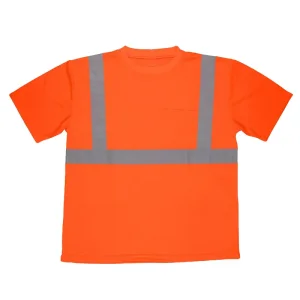
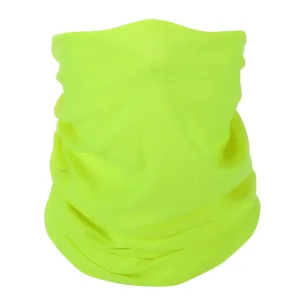
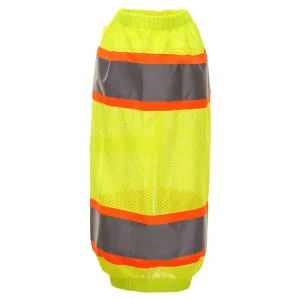
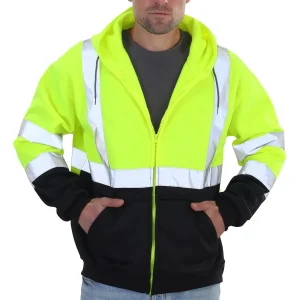
The global high-visibility (Hi-Vis) safety apparel sector has experienced a profound shift from basic occupational hazard compliance to sophisticated, high-performance protective gear. At the epicenter of this evolution are China Hi-Vis Polyester Shirts Manufacturers & Factories. Over the last two decades, Chinese manufacturing hubs—particularly within the Zhejiang and Jinhua industrial clusters—have transitioned from low-cost cut-and-sew operations into high-tech, vertically integrated textile ecosystems.
Historically, high-visibility clothing relied heavily on heavy woven cottons or basic nylon vests worn loosely over standard workwear. However, modern ergonomic safety standards and worker comfort mandates have driven the rapid adoption of specialized micro-denier polyester fabrics. Polyester's inherent hydrophobic properties, mechanical strength, and receptivity to fluorescent disperse dyes make it the undisputed gold standard for personal protective equipment (PPE) in construction, logistics, mining, utilities, and emergency response services.
Modern Hi-Vis polyester shirts utilize advanced bird-eye mesh, waffle knits, and interlock structures. These fabrics maximize airflow and capillary action, pulling sweat away from the skin to evaporate rapidly, reducing heat stress in harsh equatorial and summer climates.
Regulatory bodies (ANSI/ISEA, CEN, Standards Australia) have tightened minimum chromaticity coordinates ($x, y$) and luminance factors ($Y$). Chinese mills utilize thermosol continuous dyeing to achieve permanent fluorescent yellow-green and orange-red shades that withstand intense solar UV radiation without premature fading.
Traditional solid reflective strips restrict fabric stretch and breathability. Leading Chinese manufacturers now specialize in heat-applied, segmented micro-prismatic and micro-glass bead retroreflective films, preserving maximum garment elasticity and breathability.
For enterprise procurement officers, safety equipment distributors, and government contract bidders, purchasing Hi-Vis polyester shirts requires a complex evaluation of technical specifications, factory audits, and total cost of ownership (TCO). Procurement intent goes far beyond price per unit; it demands total compliance reliability, batch-to-batch color consistency, and rigorous anti-pilling/shrinkage guarantees.
| Key Technical Parameter | Standard Sourcing Specification | Enterprise Testing Protocol | Impact on End-User Performance |
|---|---|---|---|
| Fabric Weight (GSM) | 130 GSM - 180 GSM Bird-Eye Mesh / Jersey | ISO 3801 / ASTM D3776 | Balances tensile strength with summer thermal regulation. |
| Fluorescent Chromaticity | Luminance Factor $Y \ge 0.70$ (Yellow-Green) | EN ISO 20471 / ANSI 107 Spectrophotometry | Guarantees daytime conspicuity under harsh sunlight. |
| Retroreflectivity | $\ge 330 \text{ cd}/(\text{lx}\cdot\text{m}^2)$ (Class 2 Tape) | CIE 54.2 Retroreflectometer Test | Provides 360° night-time headlight reflection up to 300 meters. |
| Colorfastness to Washing | Grade 4-5 (ISO 105-C06) | 50 Industrial Wash Cycles at 60°C | Prevents dye bleeding and extends garment service lifespan. |
| Dimensional Stability | Length & Width Variation $< \pm 3\%$ | ISO 6330 / AATCC 135 | Maintains precise sizing and retroreflective tape alignment post-wash. |
Leading Chinese manufacturing hubs like Yongkang Wow Safety Products Co., Ltd. offer complete vertical OEM/ODM customization. International brands require precise logo integration via silkscreen printing, heat transfer vinyl (HTV), or high-definition sublimation without altering the certified luminescent background surface area. Factories must maintain accredited artwork placement templates that preserve minimum square footage of fluorescent base fabric mandated by ANSI Class 2 and Class 3 rules.
Polyester (Polyethylene Terephthalate - PET) is synthetic polymer material characterized by high hydrophobic behavior (water regain rate < 0.4%), exceptional tensile durability, and high resistance to chemical abrasion. In the context of safety workwear, raw polyester undergoes mechanical and chemical modifications to optimize wearer comfort and optical visibility.
Bird-eye mesh fabric incorporates a micro-porous pattern created by tuck stitches. This structure reduces skin contact surface by 35%, generating natural air channels. Interlock knits, conversely, offer a smoother surface optimal for detailed screen-printing and winter layering garments.
Fluorescent dyes (such as Disperse Yellow 82 and Disperse Orange 11) do not merely absorb light; they absorb non-visible ultraviolet radiation (300-400 nm) and re-emit it as longer, visible light waves (500-600 nm). Continuous thermosol dyeing at 210°C locks dye molecules into the amorphous regions of the polyester matrix.
Retroreflective tapes integrated into Hi-Vis shirts utilize thousands of microscopic high-index glass beads embedded in a polymer binder matrix. Light rays enter each bead, bounce off a metallic reflective back-layer, and return directly toward the illumination source (e.g., vehicle headlights).
Exporting Hi-Vis polyester shirts globally requires precise adherence to regional safety standards. Reliable Chinese factories must maintain certified quality management systems (ISO 9001) and produce test reports issued by accredited third-party laboratories such as SGS, TÜV Rheinland, Intertek, and UL.
Classifies garments by occupational environment: Type R (Roadway), Type P (Public Safety), and Type O (Off-Roadway). Class 2 requires at least 775 sq in of background fabric and 201 sq in of reflective tape; Class 3 requires 1240 sq in background fabric and 310 sq in reflective material, demanding full sleeve coverage on shirts.
Establishes three risk classes based on minimum surface area of visible material. Class 1 (lowest), Class 2 (intermediate), Class 3 (highest risk). Requires retroreflective tape to encircle the torso and shoulders, with strict colorfastness, perspiration, and mechanical strength testing protocols.
Australian/New Zealand standards place heavy emphasis on sun protection (UPF 40+ or 50+ rating) alongside daylight (Class D), night-only (Class N), or combined day/night (Class D/N) visibility. Polyester knit shirts exported here must feature specialized anti-UV additive treatments.
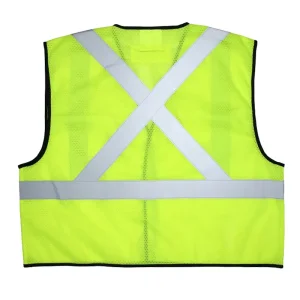
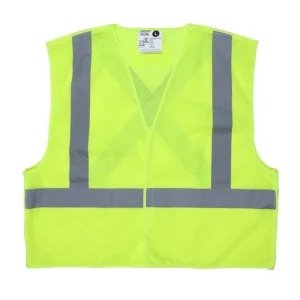
Mandates specific reflective configuration, notably an "X" pattern on the back of the garment to indicate when a worker's back is turned to approaching traffic. Canadian specifications also demand high thermal stability for cold-weather polyester fleece hybrids.
To mitigate risk in global supply chains, B2B buyers must conduct thorough due diligence when selecting OEM manufacturers in China. A top-tier factory must possess robust raw material inventory management, automated cutting facilities, and in-house inspection hardware.
Factories that control yarn procurement, weaving, dyeing, reflective tape heat-transfer, and automated stitching under one roof offer significantly lower lead times (20-30 days) and prevent batch-to-batch color variation ($\Delta E < 1.0$).
Precision automated laser and computerized knife cutting systems ensure pattern consistency, reduce fabric waste by up to 12%, and maintain exact dimensional tolerances across large production runs exceeding 100,000 units per month.
Ensure the factory holds recognized social compliance certifications such as BSCI, SEDEX (SMETA), or ISO 14001 environmental management. This guarantees smooth customs clearance and protects brand reputation.
The next decade will see a transformation in personal protective clothing driven by sustainability mandates, smart wearable technology, and advanced fiber chemistry. Chinese manufacturers are pioneering these next-generation solutions:
With global ESG commitments, procurement teams are demanding 100% post-consumer recycled polyester (rPET) yarn derived from plastic bottles. Modern rPET Hi-Vis shirts match virgin polyester in tensile strength, color vibrancy, and retroreflective bonding efficiency while reducing carbon footprint by up to 32%.
Enterprise laundries and industrial fleet managers are adopting Hi-Vis shirts embedded with washable UHF RFID micro-chips. These chips log wash cycles, track PPE assignments, and alert safety officers when a garment has reached the end of its certified life span.
Next-gen Hi-Vis polyester workwear incorporates micro-encapsulated Phase-Change Materials (PCMs) within the fiber matrix. PCMs absorb excess thermal energy when body temperatures rise and release stored thermal energy when temps drop, stabilizing microclimate comfort for highway construction crews.
For summer or high-heat operational environments, a fabric weight of 130 GSM to 150 GSM in a bird-eye mesh construction is ideal. This weight provides structural integrity for reflective tape attachment while maintaining ultra-high breathability and rapid moisture transport. For cooler climates or heavy industrial use, 160 GSM to 180 GSM jersey knit offers greater resistance to snagging and tearing.
Manufacturers use high-temperature disperse dyes combined with specialized color-fixing agents applied via continuous thermosol processing at temperatures exceeding 200°C. This locks the dye deep within the hydrophobic polyester fibers, ensuring the garment achieves a Grade 4-5 colorfastness rating under ISO 105-C06 testing across 50 consecutive wash cycles.
ANSI Class 2 garments require a minimum of 775 sq. inches of fluorescent background fabric and 201 sq. inches of retroreflective material (typically sleeveless vests or short-sleeve T-shirts). ANSI Class 3 garments require 1,240 sq. inches of background fabric and 310 sq. inches of reflective tape, requiring full-length sleeves with reflective bands around the arms to define human motion at distance.
Yes, provided the custom printed logo or company text does not reduce the continuous minimum required area of fluorescent background fabric. Manufacturers like Wow Safety work with accredited artwork grid overlays to ensure logo placements (such as chest pockets or upper back zones) maintain full compliance with ANSI/ISEA 107 or EN ISO 20471 parameters.
Polyester fibers hold fluorescent disperse dyes significantly better than cotton fibers, which fade quickly under UV sunlight exposure. Additionally, polyester does not absorb water like cotton does; instead, it transports moisture to the outer surface to dry quickly, making it far superior for physical work and outdoor labor environments.
Standard factory MOQs typically range from 500 to 1,000 units per color/design for custom OEM orders. Standard production lead times run between 20 to 35 days post-sample approval, depending on custom dyeing and retroreflective heat-transfer printing complexity.
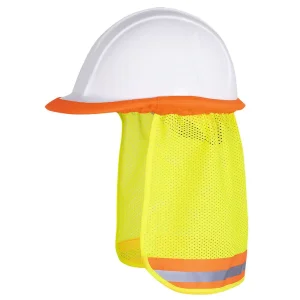
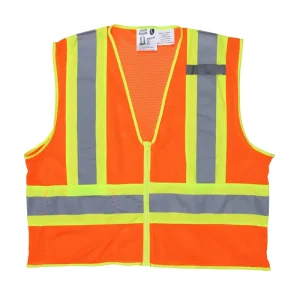
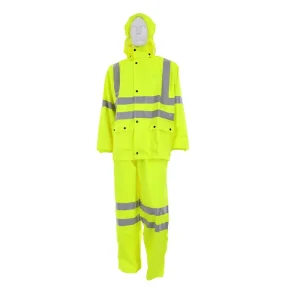
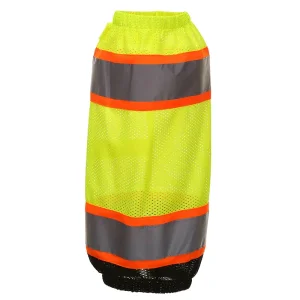
Discover our comprehensive line of reflective safety apparel, gaiters, sweatshirts, rainwear, and cooling accessories.