Explore our ANSI/ISEA 107-2020 & EN ISO 20471 compliant protective garments engineered for maximum visual contrast and industrial durability.
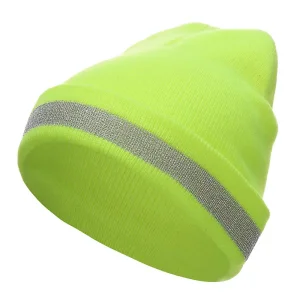
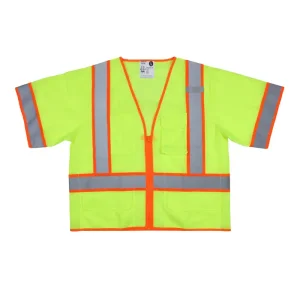
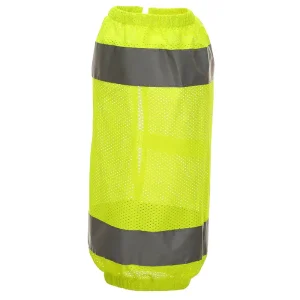
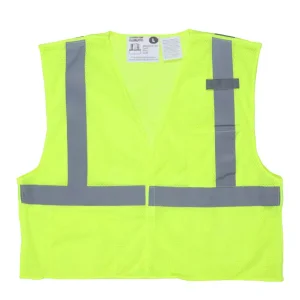
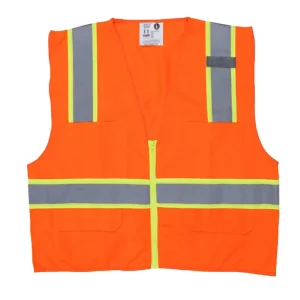
In high-risk industrial facilities, commercial skyscrapers, healthcare campuses, and logistics hubs, emergency response speed is directly correlated with visual identification clarity. Fire Wardens, Floor Monitors, Incident Commanders, and First Responders serve as the critical human layer of life safety during structural evacuations, active fires, gas leaks, and chemical spills. A Fire Warden Safety Vest is not merely standard high-visibility clothing; it is a tactical, standardized command-and-control garment engineered to establish immediate authority, optimize human traffic flow, and survive harsh environmental exposures.
Modern global safety mandates—including OSHA 29 CFR 1910, NFPA 1600 (Standard on Continuity, Emergency, and Crisis Management), and international incident command system (ICS) standards—dictate clear color-coding and retroreflective visibility requirements for emergency personnel. As enterprise procurement teams shift toward strategic sourcing, China Fire Warden Safety Vest Manufacturers & Suppliers have transitioned from basic OEM garment assemblers into advanced technical safety hubs. Integrating smart textiles, flame-retardant (FR) treatments, dielectric non-conductive closures, and ergonomic tool retention, China's industrial safety supply chain now leads the global market in providing high-information-gain, fully certified protective apparel.
Key Insight for Global Procurement Officers: A high-performance Fire Warden vest must achieve dual-spectrum optimization: maximum daytime chromaticity (using fluorescent lime-yellow, high-risk red, or safety orange substrates) combined with night-time retroreflective power (glass bead or micro-prismatic tape exceeding ISO 20471 Class 2 coefficient thresholds).
How international regulatory updates and technological innovations are reshaping the procurement landscape for Fire Warden vests.
Global corporate safety protocols now mandate universal color schemes for emergency response teams. Red and Bright Orange are specified for Fire Wardens, High-Visibility Yellow for Deputy Wardens, White for Site Incident Commanders, and Green for First Aid Officers. Manufacturers must offer exact PMS color matching and clear high-contrast screen printing (e.g., "FIRE WARDEN" boldly displayed on back and chest panels) without degrading fabric breathability.
In petrochemical plants, manufacturing facilities, and heavy industrial yards, emergency wardens are exposed to secondary flash fires and heat radiation. Industrial buyers increasingly demand Fire Warden vests crafted from inherently flame-retardant fabrics (such as Modacrylic blends or FR-treated 100% cotton) compliant with NFPA 70E and EN ISO 11612 standards, ensuring the vest does not melt or drip under thermal exposure.
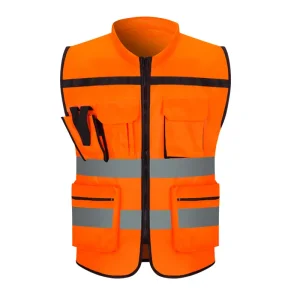
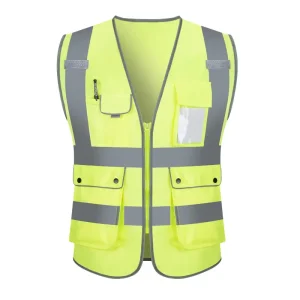
Emergency response personnel carry essential communication gear—two-way radios, gas detectors, megaphones, flashlights, and evacuation rosters. Modern Fire Warden vest designs incorporate dual radio mic loops, clear plastic badge holders, expandable tactical gusseted pockets, and 5-point breakaway Velcro seams (shoulders, sides, front) to prevent entanglement hazards in machinery or structural debris.
China's Zhejiang province (including specialized manufacturing hubs such as Yongkang) represents the world's most consolidated supply chain ecosystem for high-visibility PPE and emergency protective wear. The integration of Industry 4.0 smart manufacturing allows Chinese suppliers to deliver unparalleled unit economics, rigid quality assurance, and rapid production turnaround for multi-national tenders.
Computer-controlled laser cutting tables ensure micrometer accuracy on complex pattern layouts, minimizing fabric waste, preventing edge fraying, and guaranteeing flawless fit symmetry across tens of thousands of garments.
In-house laboratories verify every fabric dye batch against CIE L*a*b* chromaticity boundaries. Retroreflective tapes are evaluated using automated spectrophotometers to guarantee >330 cd/(lx·m²) performance before entering assembly lines.
From yarn spinning and high-visibility dye houses to retroreflective heat-transfer film bonding and custom embroidery workshops, raw materials are sourced within a 50-kilometer industrial radius, dramatically reducing lead times.
By leveraging this concentrated industrial cluster, companies like Yongkang Wow Safety Products Co., Ltd. can execute low-minimum-order (MOQ) prototype customization while retaining the throughput capacity required to ship hundreds of thousands of certified safety vests monthly to B2B distributors in North America, Europe, Australia, and the Middle East.
Comparative benchmark analysis of premium Fire Warden Safety Vest specifications for enterprise procurement managers.
| Garment Feature | Standard Commercial Grade | Enterprise Fire Warden Grade | Heavy-Duty Industrial FR Grade |
|---|---|---|---|
| Primary Base Fabric | 120 GSM 100% Polyester Mesh | 160 GSM Heavy Polyester Tricot / Mesh | 200 GSM Modacrylic / FR Treated Cotton |
| Retroreflective Material | Standard Glass Bead Tape (Class 1) | 3M™ Scotchlite™ / Micro-Prismatic (Class 2) | FR Heat Transfer Prismatic Film |
| Reflectivity Index ($R_A$) | > 100 cd/(lx·m²) | ≥ 330 cd/(lx·m²) | ≥ 450 cd/(lx·m²) |
| Safety Standard Compliance | Basic Visibility / Non-ANSI | ANSI/ISEA 107-2020 Type R Class 2 / EN ISO 20471 | ANSI Class 3 / NFPA 70E / EN ISO 11612 |
| Closure System | Basic Zipper or Single Hook & Loop | Dielectric Zipper + 5-Point Breakaway Velcro | Heavy Duty Brass Zipper with Storm Flap |
| Wash Endurance | 15 to 25 Domestic Cycles | 50+ Certified Industrial Wash Cycles | 50+ Heavy Industrial Wash Cycles |
| Identification Printing | Standard Silk Screen | Reflective / High-Contrast Heat Transfer | Flame-Retardant Screen Printing / Patch |
Understanding how different operational environments dictate safety vest design and feature sets.
Evacuating multi-story office towers demands rapid visual organization. Fire Wardens need bright red or fluorescent orange vests equipped with transparent chest badge holders for instant identification card insertion, a microphone loop for public address radios, and back panels printed with "FLOOR WARDEN" in 4-inch bold reflective lettering visible down long corridors.
Busy distribution centers with forklift traffic present severe snagging and collision risks. Vests for warehouse Fire Wardens utilize 5-point breakaway construction so the garment instantly detaches if caught by moving machinery or racking systems, paired with breathable mesh sides to manage heat fatigue during drills.
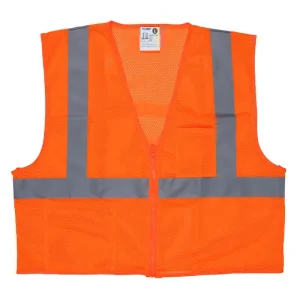
Low-light outdoor environments subject to extreme weather require ANSI Class 3 high-visibility long-sleeve safety vests. Micro-prismatic reflective stripes ensure visibility under torrential rain or fog, while dielectric plastic zippers prevent arc flash hazards near electrical equipment ground power units.
When selecting a Chinese manufacturing partner for enterprise safety vest contracts, corporate buyers must conduct thorough quality control and compliance audits to prevent liability and ensure wearer safety. Evaluating a supplier's E-E-A-T credentials involves verifying specific technical documentation and factory capabilities.
Ensure your supplier provides valid test reports from internationally accredited testing bodies such as SGS, TÜV Rheinland, Intertek, or SATRA. Key test reports include:
A durable industrial vest should feature a stitch density of 10–12 stitches per inch (SPI) using high-tenacity 100% polyester thread. Stress points, such as pocket corners, zipper bases, and mic loops, must be reinforced with dense bar-tack stitching to withstand heavy daily use.
Top-tier suppliers offer comprehensive customization including custom Pantone dye matching, specialized pocket layout redesigns, reflective vinyl logo heat-transfer printing, and custom multi-language instruction tags for global dispatch.
Expert answers to critical questions regarding Fire Warden safety vest procurement, customization, and safety compliance.
While standards vary by region, Red and Fluorescent Safety Orange are the most universally recognized colors for Fire Wardens. Fluorescent Lime-Yellow is often assigned to general Safety Officers or Deputy Wardens. Many organizations specify Red vests with 2-inch silver retroreflective tape and bold text ("FIRE WARDEN") on the back to ensure instant differentiation during an emergency evacuation.
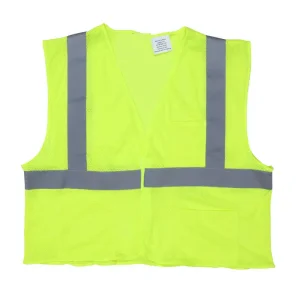
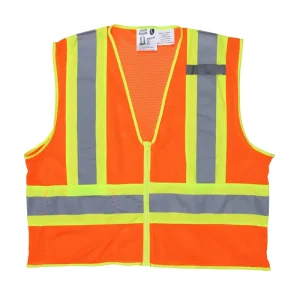
ANSI Class 2 vests require a minimum of 775 sq. inches of background fabric and 201 sq. inches of retroreflective tape, making them ideal for indoor facilities or roadway environments where traffic speeds do not exceed 25 mph. ANSI Class 3 garments require sleeves and expanded reflective coverage (1,240 sq. inches of background fabric), designed for high-risk, low-visibility outdoor areas with heavy machinery or fast-moving traffic.
Yes, corporate logos and custom text can be added. However, the total area of non-compliant logo printing must not reduce the visible background fabric or retroreflective tape area below the standard's certified thresholds. Leading manufacturers strategically place logos on clear chest pockets or designated non-reflective zones to ensure full compliance.
A 5-Point Breakaway system uses heavy-duty Hook & Loop fasteners at the shoulders, sides, and front closure. If a Fire Warden is caught by machinery, structural wreckage, or an assailant during an emergency, the vest easily detaches from the body, preventing strangulation or entrapment hazards.
Standard reflective tapes degrade after 15 to 25 wash cycles. Premium Fire Warden vests engineered by top China suppliers utilize high-grade glass-bead or heat-laminated micro-prismatic tapes certified to retain over 100 cd/(lx·m²) reflectivity even after 50+ industrial wash cycles at 60°C.
Sample creation and prototype approval typically take 3 to 5 business days. Once bulk order specifications are finalized, standard mass production lead time is 15 to 25 days for quantities ranging from 1,000 to 50,000 units, backed by expedited sea or air freight shipping options.
Complementary emergency response gear, reflective apparel, and high-visibility accessories built for demanding enterprise buyers.