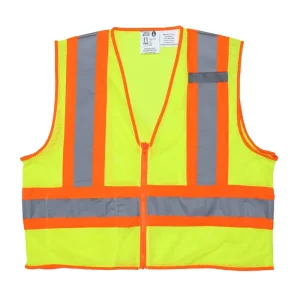
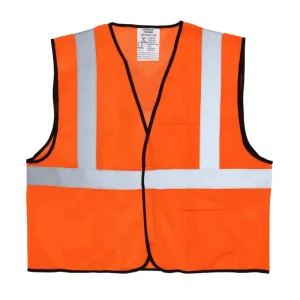
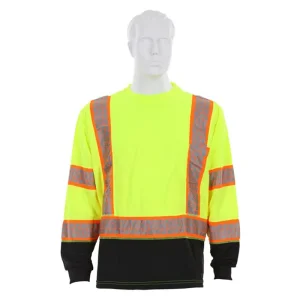
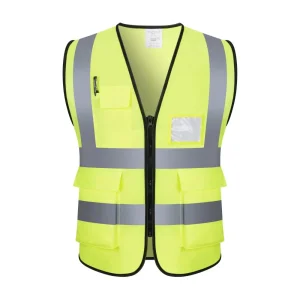
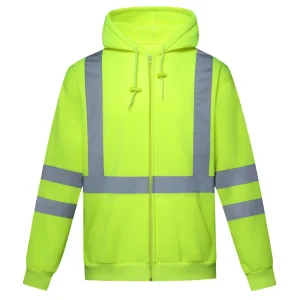
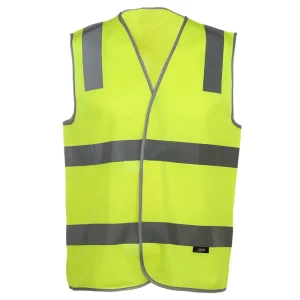
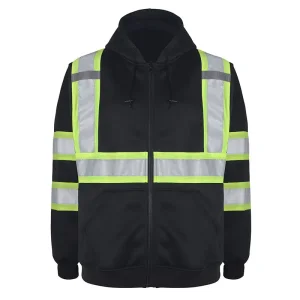
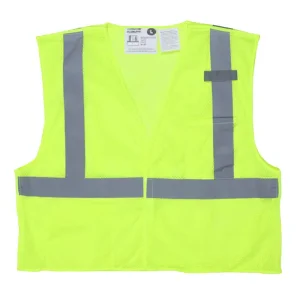
Explore our certified ANSI/EN ISO compliant safety vests, engineered for maximum retroreflectivity, durability, and worker safety across global industrial applications.
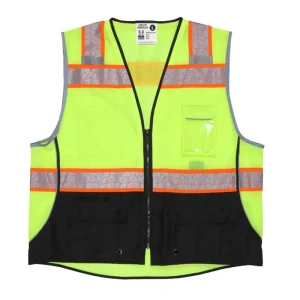
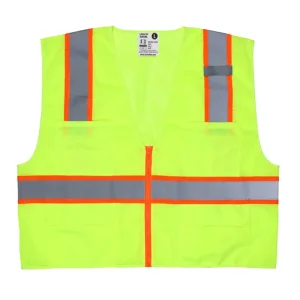
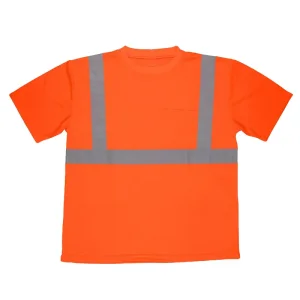
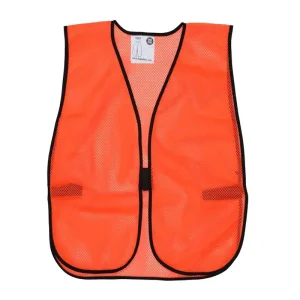
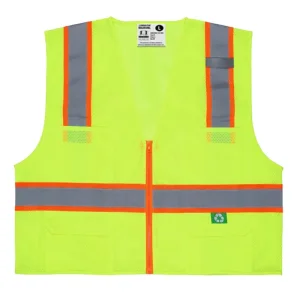
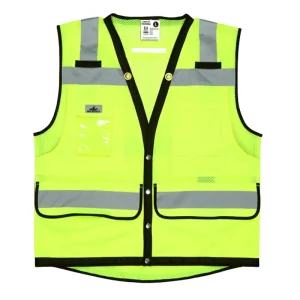
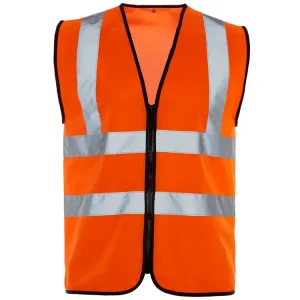
Yongkang Wow Safety Products Co., Ltd. brings over 15 years of precision industrial manufacturing to global high-visibility apparel procurement.
Headquartered in Jinhua City, Zhejiang Province—the heart of China's advanced textile and personal protective equipment (PPE) manufacturing hub—Yongkang Wow Safety Products Co., Ltd. operates at the intersection of material innovation and industrial scale. Our integrated manufacturing eco-system spans high-density cotton weaving, eco-friendly fluorescent reactive dyeing, automated precision cutting, and ISO-certified retroreflective tape application.
While synthetic polyester vests dominate lower-tier disposable safety wear, high-end industrial sectors—including petrochemical processing, heavy arc-flash electrical utility work, molten metal metallurgy, and tropical zone infrastructure—demand the inherent breathability, non-melting safety, and anti-static properties of 100% natural cotton and cotton-rich Flame-Retardant (FR) formulations.
Every cotton safety vest crafted in our factory complies strictly with global compliance benchmarks, including ANSI/ISEA 107-2020 (Type R/P, Class 2 and Class 3), EN ISO 20471:2013+A1:2016, and specialized flame-resistant protocols such as NFPA 2112 and ASTM F1506.
Understanding the fundamental material differences, thermal performance factors, and total cost of ownership in B2B safety apparel procurement.
In the global occupational safety ecosystem, selecting the appropriate textile fiber for High-Visibility Safety Apparel (HVSA) is not merely a purchasing preference—it is a critical safety parameter that directly affects worker health, thermal balance, compliance retention, and workplace incident rates. While 100% polyester mesh and solid knit fabrics account for a significant market share of entry-level safety vests due to low material production costs, China Cotton Safety Vest Manufacturers are experiencing rapid global order growth driven by demanding industrial applications.
Unlike synthetic thermoplastic fibers (polyester, nylon) which melt at temperatures between 250°C and 265°C and adhere catastrophically to human skin during flash fire or electric arc exposure, natural cotton fibers do not melt. Cotton chars into a protective insulating carbonaceous layer when exposed to extreme heat. Furthermore, natural cotton exhibits a moisture regain rate of 7.5% to 8.5% (compared to polyester's negligible 0.4%), enabling superior sweat absorption, evaporative cooling, and static charge dissipation in explosive dust environments.
| Performance Parameter | 100% Natural Cotton Vest | FR Cotton / Modacrylic Blend | 100% Polyester Mesh Vest |
|---|---|---|---|
| Thermal & Flame Safety | Chars; does not melt or drip Safe for Heat | Self-extinguishing (NFPA 2112) Arc Flash Rated | Melts & drips at ~250°C Melting Hazard |
| Moisture Absorption & Breathability | Superior (8.5% Moisture Regain) | High (6.0% - 7.5% Regain) | Low (0.4% Moisture Regain) |
| Static Electricity Dissipation | Inherent anti-static properties | Anti-static carbon fiber grid optional | High static accumulation risk |
| Fluorescent Colorfastness (UV) | Requires specialized reactive dyes | High optical stability | Excellent initial brightness |
| Tensile & Tear Resistance | High tear strength in heavy twill/canvas | Exceptional rip-stop structure | Moderate to low in mesh variants |
| Skin Comfort & Hypoallergenic | 100% Natural, zero skin irritation | High skin comfort | May cause chafing in hot/humid conditions |
| Environmental Degradation | 100% Biodegradable (5-6 months) | Partial bio-degradability | Non-biodegradable microplastics |
While the initial unit purchase cost of a heavy-duty 280 GSM cotton twill safety vest is 25% to 40% higher than a basic polyester mesh vest, its extended operational lifespan in harsh working conditions yields a lower Cost Per Wear (CPW).
Global regulatory bodies such as OSHA (USA), EU-OSHA (Europe), and Safe Work Australia are tightening PPE mandates for multi-hazard environments, driving industrial safety managers to specify cotton-rich HVSA.
China produces over 30% of the world's raw cotton and houses advanced dyeing facilities capable of fixing fluorescent lime and orange chromophores onto natural cotton fibers while meeting strict ISO colorfastness standards.
Overcoming traditional material boundaries through advanced textile chemistry, ergonomic 3D modeling, and smart wear integration.
Historically, cotton safety vests faced challenges with flame resistance washing off over extended laundering. Modern Chinese factories utilize chemical bonding processes like PROBAN® and PYROVATEX®. Tetrakis(hydroxymethyl)phosphonium salts polymerize inside the hollow cotton lumen, forming an insoluble flame-retardant polymer trapped within the cellulose matrix.
Achieving high-visibility Fluorescent Yellow-Green and Fluorescent Orange-Red on natural cotton fibers requires overcoming cellulosic light absorption. Advanced Chinese dye laboratories have engineered specialized cationized reactive dyes that bond covalently with cotton cellulose hydroxyl groups.
Modern cotton safety vests are engineered with ergonomic load-bearing structures. Heavy utility tools carried in surveyor and engineer vests can cause neck strain. By integrating 3D articulated shoulder pads, reinforced cotton canvas load straps, and balanced multi-pocket geometry, weight is redistributed across the wearer's trapezius and core muscles.
The future roadmap for China Cotton Safety Vest suppliers includes integrating conductive thread pathways, washable RFID asset tracking chips, and ambient body-temperature monitoring sensors directly into the cotton matrix. Furthermore, the adoption of GOTS-certified organic cotton and mechanical recycled cotton reduces environmental impact.
Tailored high-visibility cotton workwear designs optimized for rigorous global workplace conditions.
Operational Risk: Flash fire events, static electricity ignition in explosive vapor zones (ATEX Zone 0/1), high ambient working temperatures.
Cotton Vest Configuration: 100% FR Cotton Twill (240-300 GSM) treated with durable flame retardants, anti-static grid threading, non-conductive FR plastic zippers, and flame-resistant aramid retroreflective striping.
Operational Risk: Electric arc flash explosions, thermal arc energy release, high-voltage equipment contact.
Cotton Vest Configuration: Heavy-duty Cotton-Modacrylic blend or 100% FR Cotton Canvas with an Arc Thermal Performance Value (ATPV) rating of ≥ 8.2 cal/cm² (Arc Flash Hazard Category 2), featuring covered hook-and-loop closures.
Operational Risk: Molten metal sparks, hot slag spatter, high thermal radiation from furnaces.
Cotton Vest Configuration: Extra-heavyweight 350 GSM cotton duck canvas with spatter-repellent finish, high collar neck coverage, reinforced leather pocket trims, and glass bead retroreflective tape.
Operational Risk: Heat exhaustion, high vehicular speed exposure, heavy physical exertion under sunlight.
Cotton Vest Configuration: Lightweight 180 GSM breathable cotton mesh or vented cotton duck back panels in high-visibility fluorescent lime/orange with 3M™ Scotchlite™ 8912 reflective material.
A comprehensive 5-stage procurement audit framework for international B2B buyers, safety equipment distributors, and government contract bidders.
Before mass cutting, certified China suppliers conduct laboratory testing on raw cotton fabric lots:
The retroreflective tape is the core safety element of high-visibility garments:
Precision execution during automated cutting, sewing, and assembly:
Ensuring compliance with international social liability standards:
Expert insights on cotton safety vest specs, international standards, MOQ, and OEM customization.
100% cotton safety vests provide significant safety advantages in high-temperature, electrical, and petrochemical environments. Cotton does not melt when exposed to sparks, flame, or arc flashes—unlike polyester, which melts and causes severe secondary skin burns. Furthermore, cotton is naturally breathable, absorbs moisture, dissipates static electricity, and offers superior comfort during extended shifts in hot climates.
Yes. China cotton safety vest factories achieve ANSI/ISEA 107-2020 Class 2 and Class 3 compliance by utilizing high-brightness fluorescent reactive dyes on specialized cotton fabric weaves. By combining certified fluorescent background fabric surface areas (minimum 775 sq. inches for Class 2; 1,240 sq. inches for Class 3) with certified 2-inch wide retroreflective tape, cotton vests fulfill all ANSI visibility requirements.
FR cotton safety vests undergo specialized chemical processing (such as PROBAN® or PYROVATEX®) where flame-retardant polymers are chemically bound within the core cellulose fibers. When exposed to flame, the treated cotton forms a insulating char barrier that cuts off oxygen and self-extinguishes instantly without dripping. These treatments are engineered to withstand 50 to 100 industrial wash cycles.
We provide comprehensive OEM/ODM customization services including custom fabric weight selection (180 GSM to 350 GSM duck canvas), custom dye matching (Pantone / High-Vis Lime & Orange), screen printing, heat transfer or embroidery of company logos, custom pocket configurations (surveyor pockets, tablet sleeves, badge holders), breakaway safety seam design, and specialized private label packaging.
Our standard Minimum Order Quantity (MOQ) for custom cotton safety vests is typically 500 to 1,000 pieces per style, depending on fabric specification and dye customization. Pre-production sample lead time is 5 to 7 working days, and mass production delivery is completed within 20 to 30 days after sample approval.
Discover complete protective apparel solutions engineered by Yongkang Wow Safety Products Co., Ltd.