Buying High Visibility T Shirts is not simply a matter of choosing bright fabric. It is a workplace visibility decision. A worker beside a loading bay may face dust, rain, headlights, moving forklifts, and poor contrast. Small design choices can matter.
ANSI/ISEA 107-2020 and ISO 20471 classify high-visibility garments by background material, retroreflective performance, and garment design. These standards give global buyers a useful technical foundation. OSHA also requires suitable high-visibility garments for workers exposed to vehicular traffic in certain construction environments. Meanwhile, NIOSH workplace investigations repeatedly identify struck-by incidents as a serious occupational hazard. The message is clear: appearance alone is not enough.
Dr. David Michaels, former OSHA Assistant Secretary, describes personal protective equipment as “the last line of defense.” That warning should influence every purchasing decision. A T-shirt may look compliant, yet fail through weak reflective tape, poor sizing, low color contrast, or rapid washing damage. Grand View Research and other market reports show continuing demand for safety apparel, but market growth does not guarantee product quality. Buyers still need evidence.
This guide presents 10 High Visibility T Shirts buying tips for global buyers. It examines fabric weight, fluorescent color, reflective coverage, sizing, breathability, testing documents, care performance, supplier experience, and total cost. Some choices remain imperfect. A lighter shirt may improve comfort but reduce durability. A cheaper order may create replacement costs later. Careful comparison is essential.
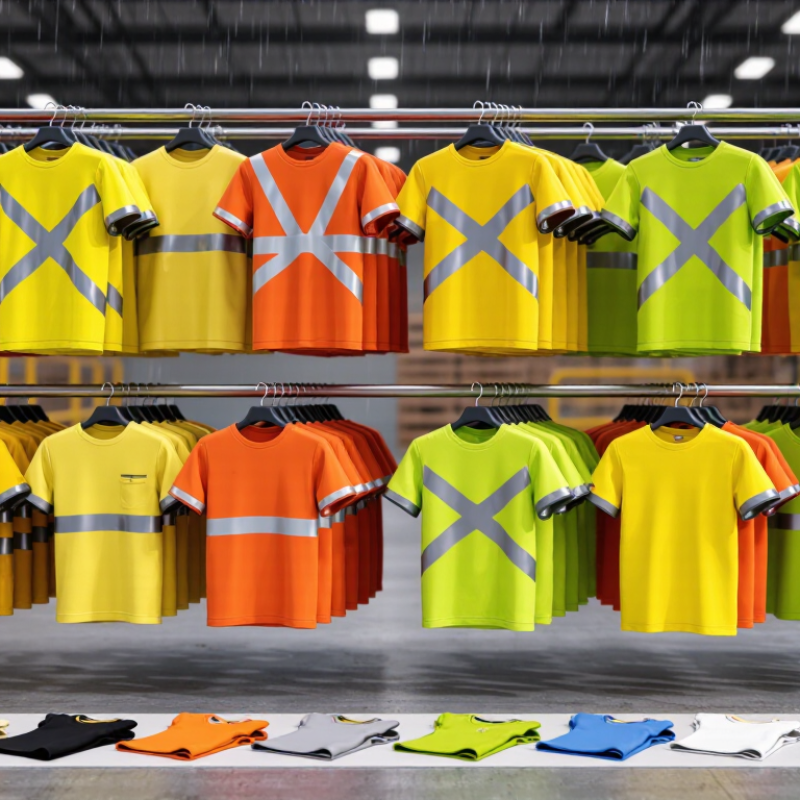
For global buyers, visibility requirements should guide every high visibility T-shirt decision. Start by identifying the worker’s environment: roadside traffic, warehouses, construction zones, or low-light facilities. Daylight exposure needs fluorescent fabric, while nighttime work requires retroreflective material. Background conditions matter too. Orange may stand out near green vegetation, but yellow can perform better around dark machinery.
Check the applicable safety standard before comparing prices. ISO 20471 and ANSI/ISEA 107 use different garment classifications, design rules, and test methods. Some markets may follow national adaptations. Ask suppliers for current conformity documents, laboratory test reports, and fabric performance data. Do not rely on a printed “certified” label alone. Verify whether the report covers the exact T-shirt design, fabric color, reflective tape, and production batch.
Examine practical details during sampling. Reflective bands should remain visible from the front, back, and side. Sleeves, seams, and logos must not block required visibility areas. Review colorfastness after repeated washing, especially if workers face dust, sweat, or industrial cleaning. A T-shirt can meet a laboratory requirement yet perform poorly when loose, dirty, or covered by equipment. This is an easy point to miss. Request wash-test evidence, care instructions, and a pre-shipment inspection. Requirements change across countries, and supplier advice may be incomplete, so confirm details with a qualified local safety professional.
For global buyers, choose the visibility class before selecting color or decoration. ANSI/ISEA 107-2020 separates garments into Type O, R, and P, then assigns performance classes. Type R garments suit roadway work, while Class 2 or Class 3 provides stronger coverage. EN ISO 20471 uses Classes 1, 2, and 3. These systems are not interchangeable. Check the destination market and buyer specification carefully.
Design details affect real-world visibility. Use broad fluorescent panels across the torso, not only narrow shoulder strips. Add segmented retroreflective tape around the waist and sleeves. It should remain visible when the wearer bends or carries tools. The U.S. Bureau of Labor Statistics recorded 1,069 fatal injuries in transportation and material-moving occupations in 2023. This figure does not prove that shirts prevent incidents. It does show why visibility deserves serious purchasing attention. A clean design can still fail after repeated washing. That is an uncomfortable lesson.
Tips: Request certification documents and test reports. Check reflective performance after washing. Confirm size grading across regions. Inspect seam strength and tape adhesion. Avoid excessive logos that cover fluorescent material. Choose breathable fabric for hot climates, but do not sacrifice required coverage. One fitting sample is not enough.
The chart shows the minimum visible material areas specified by EN ISO 20471 for high-visibility clothing. Classes 1 and 2 use the same minimum material quantities but differ in garment configuration and visibility requirements, while Class 3 requires larger fluorescent and retroreflective areas for the highest level of visibility.
10 High Visibility T Shirts Buying Tips for Global Buyers
For global procurement, start with measured fabric performance, not a bright color photograph. Textile Exchange’s Materials Market Report 2024 estimates polyester supplied 59% of global fiber output in 2023. That scale explains its popularity. Polyester dries quickly and holds fluorescent dye well. However, fiber content alone proves little. Request fabric weight, colorfastness results, pilling data, and dimensional change after washing. ISO 6330 washing procedures support comparable testing, while ISO 20471 specifies high-visibility performance requirements. I would inspect a sample after repeated laundering. It can look tired fast. Include sweat, detergent, and rough handling in the trial.
Reflective tape needs separate scrutiny. Ask for retroreflection results, tape width, placement, and performance after the stated wash limit. ANSI/ISEA 107-2020 and ISO 20471 use different classification and documentation approaches. Do not treat one certificate as universal approval. Rain is another weak point. The U.S. National Weather Service reports that wet conditions reduce visibility and increase glare. Check the shirt under headlights and rain, not only indoors. Look for breathable knit, covered seams, and a declared water-repellent finish. “Water-resistant” is not waterproof. I once prioritized bright fluorescence and ignored slow drying; field users disliked the shirt by noon. That was a poor assumption. For hot climates, compare moisture-management results, air permeability, and drying time.
When buying high-visibility T-shirts across markets, treat sizing as a measurement task, not a label choice. Ask suppliers for chest, shoulder, sleeve, and garment-length charts in centimeters. Compare these measurements with a shirt worn by your target workers. A medium in one region may fit like a small elsewhere. Request a pre-production sample. It prevents expensive assumptions. Check movement too. Lift both arms, bend, and reach while wearing the sample. Tight shoulders can reduce comfort during long shifts.
Tips: Comfort depends on fabric weight, airflow, seams, and label placement. Choose breathable fabric for hot sites, but avoid thin material that loses shape quickly. Run a simple trial: wear the shirt for four hours, then inspect sweat, rubbing, and odor. Our first sample looked bright but felt stiff. That mistake changed our fabric testing process. Ask about wash resistance, colorfastness, reflective tape attachment, and seam reinforcement. Durability claims need evidence. Request test reports, wash samples, and production photos. Small details matter.
Tips: Customization should preserve visibility, not cover reflective areas with large graphics. Confirm print size, logo position, color accuracy, and artwork approval before production. For international orders, clarify packaging, size ratios, carton labels, and replacement procedures. A reliable supplier should explain tolerances honestly, including minor print or measurement variation. Do not accept vague promises. Keep a signed specification sheet with fabric composition, color references, measurements, and inspection points. If the shirt must meet local workplace requirements, verify the applicable rules independently before shipment.
| Buying Tip | What to Check | Practical Specification or Benchmark | How to Verify | Customization and Purchasing Notes |
|---|---|---|---|---|
| 1 Confirm the Safety Standard | Check whether the shirt is intended for a recognized high-visibility standard in the destination market. | Look for the applicable standard and garment class on technical documentation. Common examples include ANSI/ISEA 107 in North America and EN ISO 20471 in Europe. | Request a current test report, declaration of conformity, care label, and product technical sheet. Confirm that the document applies to the exact fabric, color, and design. | Do not assume that a fluorescent color alone makes a garment compliant. Custom logos, color panels, and design changes may affect the certified configuration. |
| 2 Select the Correct Size Range | Compare actual body measurements with the supplier's size chart instead of relying only on S, M, L, or XL labels. | Measure chest, waist, shoulder width, and body length in centimeters or inches. For workwear worn over a base layer, allow practical ease rather than choosing a tight fit. | Request a measurement chart and a pre-production sample. Check measurements after washing because some fabrics can shrink. | For global orders, use dual-unit charts and clearly state whether measurements are body measurements or finished-garment measurements. |
| 3 Prioritize Breathability and Comfort | Evaluate fabric weight, moisture management, ventilation, seams, and the feel of the reflective material. | Lightweight polyester is commonly used for warm conditions; mesh panels can improve airflow. A smooth neck tape and flat or covered seams can reduce skin irritation. | Ask for fabric composition, fabric weight in GSM, air-permeability information when available, and a wear-test sample in the intended climate. | Choose fabric and construction according to use: lightweight mesh for hot environments, or a denser knit for increased coverage and cooler conditions. |
| 4 Check Fluorescent Fabric Visibility | Review the fluorescent background material in daylight and the contrast between the fabric, reflective tape, and printed areas. | Typical fluorescent colors include yellow, orange, and red; the acceptable color and performance depend on the selected safety standard and garment class. | Request laboratory test results for chromaticity and luminance performance where required by the target standard. Inspect color consistency between production lots. | Keep large dark logos and decorative panels away from required background-material areas unless the revised design has been assessed for compliance. |
| 5 Examine Reflective Tape Layout | Check tape width, placement, continuity, flexibility, and visibility from the front, back, and sides. | Reflective tape must be arranged according to the applicable standard and garment class. Common shirt layouts use torso bands and shoulder or sleeve elements, but exact requirements vary. | Review front, back, and side photographs or drawings. Ask for retroreflective performance test information and inspect the tape after stretching and laundering. | Specify tape color, width, pattern, and acceptable tolerances in the purchase order. Avoid placing embroidery directly over reflective tape. |
| 6 Assess Stitching and Durability | Inspect seam strength, hem construction, bartacks, collar attachment, sleeve joints, and loose threads. | Reinforced stress points and secure overlock or coverstitch construction help reduce seam failure during repeated work use. | Review a production sample, perform seam and pull testing where appropriate, and inspect the first bulk shipment against the approved sample. | Define stitch color, seam allowance, thread type, and tolerance requirements. Heavy embellishment should not weaken high-stress areas. |
| 7 Verify Wash and Colorfastness Performance | Determine whether fluorescent fabric, reflective tape, printed graphics, and labels remain usable after the intended care process. | Use the care instructions supplied for the exact garment. Washing temperature, detergent, bleach, tumble drying, ironing, and dry cleaning can affect appearance and performance. | Request laundering test results where relevant and conduct an internal wash trial using the expected care method before approving mass production. | Print care symbols and written instructions in the destination market's required language or languages. Avoid care instructions that conflict with the safety documentation. |
| 8 Review Customization Options | Check screen printing, heat transfer, embroidery, woven labels, neck labels, packaging, and individual name or number options. | Customization should preserve required fluorescent and retroreflective areas. Large graphics are generally best placed on permitted non-reflective zones. | Approve a physical decorated sample. Check logo size, color accuracy, adhesion, wash resistance, placement, and readability before production. | Provide vector artwork, Pantone references when applicable, placement diagrams, tolerance limits, and a clear approval process for artwork changes. |
| 9 Confirm Traceability and Documentation | Ensure that each shipment can be linked to its material specification, production batch, care instructions, and inspection records. | Useful records include style number, size breakdown, fabric composition, batch or lot code, inspection report, packing list, and applicable compliance documents. | Compare carton labels, inner labels, purchase-order details, and test documents. Use pre-shipment inspection based on an agreed sampling plan. | Specify carton marks, barcode format, language requirements, country-of-origin marking, folding method, and packaging quantities before ordering. |
| 10 Compare Total Landed Cost | Evaluate product price together with customization, sampling, testing, freight, duties, packaging, and possible replacement costs. | Request quotations using the same assumptions: fabric weight, size range, decoration method, order quantity, delivery term, destination, and currency. | Compare at least one approved sample and one complete landed-cost calculation. Confirm lead time for sampling, production, inspection, and shipping. | Ask for quantity breaks and spare-unit policy. Record approved specifications in the purchase order so lower-cost substitutions cannot be made without written approval. |
10 High Visibility T Shirts Buying Tips for Global Buyers
Start with supplier evidence, not polished product photos. Request a business license, factory address, production capacity, and recent inspection records. Ask whether reflective tape, fabric weight, colorfastness, and stitching are tested consistently. Request samples from the same production line. Small details matter. Measure visibility panels and check comfort under a work jacket. Certifications need careful review. For high-visibility garments, verify the applicable standard, certificate scope, testing laboratory, and expiry date. ANSI/ISEA 107 and EN ISO 20471 address different market requirements. Do not accept a certificate without checking its product class and report number.
Compare total cost, not only the quoted shirt price. Include sample fees, size grading, labels, packaging, inspection, duties, taxes, and inland delivery. Ask for MOQ and price breaks in writing. A low quote may hide weaker fabric or costly rework. Many purchasing teams make this mistake. That deserves attention. Confirm fabric composition and size tolerance before approving bulk production.
Shipping terms can change the real budget. Under FOB, you usually manage the main ocean freight and later charges. Under DDP, the supplier may arrange delivery and import costs, but confirm what is legally included. Compare Incoterms, transit time, carton dimensions, gross weight, and insurance. Request a landed-cost worksheet. Confirm whether air, sea, or rail service fits the deadline. Also agree on production milestones and remedies for late delivery. Written terms reduce surprises, although they cannot replace supplier verification. Leave room for delays.
Request fabric weight, fiber composition, colorfastness results, pilling data, and dimensional change after washing. A sample can look excellent initially. Inspect it after repeated washing, sweating, detergent exposure, and rough handling.
Ask for retroreflection results, tape width, placement details, and the declared wash limit. Check performance under vehicle headlights, both indoors and during rain. One certificate may not cover every market or product class.
Look for breathable knit fabric, covered seams, and a declared water-repellent finish. Water-resistant does not mean waterproof. Compare drying time, air permeability, and moisture-management results for hot climates.
Request chest, shoulder, sleeve, and garment-length measurements in centimeters. Compare them with a shirt worn by the target workers. Labels can mislead. Use a pre-production sample and test arm movement, bending, and reaching.
Wear the sample for four hours and inspect sweat, rubbing, odor, and shoulder tightness. Check fabric airflow, seams, label placement, and overall weight. A bright shirt may still feel stiff by noon.
Request wash samples, test reports, production photos, and evidence of seam reinforcement. Inspect reflective tape attachment and color retention after washing. Claims need proof. I once trusted appearance too much, and that was a poor assumption.
Keep large graphics away from reflective areas and visibility panels. Confirm print size, artwork position, color accuracy, and approval procedures before production. Record every detail in a signed specification sheet.
Request the business license, factory address, production capacity, and recent inspection records. Check the applicable standard, certificate scope, laboratory, product class, report number, and expiry date. Do not rely on polished photographs.
Include sample fees, grading, labels, packaging, inspection, taxes, duties, and inland delivery. Confirm minimum order quantities and price breaks in writing. A low shirt price may hide weak fabric or expensive rework.
Compare delivery terms, transit time, carton dimensions, gross weight, insurance, and transport methods. Request a landed-cost worksheet. Confirm production milestones and remedies for late delivery. Leave room for delays.
Buying High Visibility T Shirts for international workwear programs requires more than comparing colors and prices. Global buyers should first identify the safety standards and visibility requirements that apply to the intended job, location, and working conditions. Selecting the correct visibility class and shirt design is essential, whether the garment is intended for daytime use, low-light environments, or changing weather. Buyers should also assess fabric quality, breathability, moisture management, reflective material performance, and resistance to washing and wear.
A reliable purchasing decision should include a careful review of sizing, comfort, stitching, durability, and customization options such as colors, logos, or printed information. Comparing suppliers involves checking production capacity, quality-control processes, relevant certifications, communication, lead times, and minimum order quantities. Total cost should include samples, packaging, transport, duties, and international shipping terms rather than focusing only on the unit price. By evaluating these factors together, buyers can select comfortable, durable, and suitable High Visibility T Shirts that support worker visibility and long-term value.