2026 Top Safety Jacket Manufacturers for Global Buyers?

Time:2026-09-20 Author:Sienna
0%

Choosing the right Safety Jacket in 2026 requires more than comparing colors, prices, and catalog photos. Global buyers need dependable manufacturers, verified production records, and products suited to real working conditions. A jacket may look highly visible on a bright screen, yet perform differently after rain, washing, or extended outdoor use. Small details matter. Seam quality matters. Zipper strength matters.

This guide examines leading Safety Jacket manufacturers for international purchasing teams. It considers fabric performance, reflective material placement, sizing consistency, customization options, factory capacity, quality control, and export experience. It also reviews how manufacturers document product testing and manage batch consistency. Buyers should check current requirements in their destination markets, because standards and workplace expectations may differ. Technical documents deserve careful reading, not assumptions.

Experience from industrial procurement shows that the cheapest quotation rarely tells the complete story. A lower unit price can hide weaker fabric, limited inspection, or expensive replacement orders. Still, higher prices do not automatically prove better quality. That is worth remembering. Reliable evaluation should combine samples, factory communication, production evidence, and independent verification where appropriate. This article is not a substitute for professional compliance advice. It is a practical starting point for comparing manufacturers with greater confidence. Mistakes can happen, even in a carefully reviewed supply chain. The goal is to reduce avoidable risk through clear questions, measurable criteria, and honest reflection.
2026 Top Safety Jacket Manufacturers for Global Buyers?

What Defines a Top Safety Jacket Manufacturer in 2026

In 2026, a top safety jacket manufacturer is defined by verified performance, not attractive catalogs. Experienced buyers examine fabric certificates, seam strength, colorfastness, and reflective visibility after repeated washing. A serious factory can explain its testing methods in plain language. It should provide dated inspection records and production samples from the same line. Small details matter. A jacket that looks bright indoors may lose contrast under rain or vehicle headlights.

Manufacturing expertise appears in fit, grading, and climate-specific construction. Workers in cold ports need adjustable cuffs, secure pockets, and insulation that does not restrict movement. Tropical crews may need lightweight mesh, vented backs, and quick-drying fabric. Top manufacturers test these choices with real users, not only mannequins. They measure visibility at distance, zipper durability, and comfort during long shifts. Still, no factory gets every decision right. A pocket can be useful yet catch on equipment. Honest suppliers record such failures and revise patterns.

Reliability also depends on traceability and communication. Global buyers should ask who made the fabric, how batches are identified, and how defects are handled. Clear lead times matter, but realistic lead times matter more. A dependable manufacturer shares pre-production samples, confirms measurement tolerances, and reports changes before shipment. It should support independent inspections without treating them as distrust. Pricing deserves scrutiny too. Extremely low quotes may hide thinner fabric, rushed stitching, or weak after-sales support. The strongest partnership is practical, documented, and open to correction.

Key Safety Jacket Types and Their Global Applications

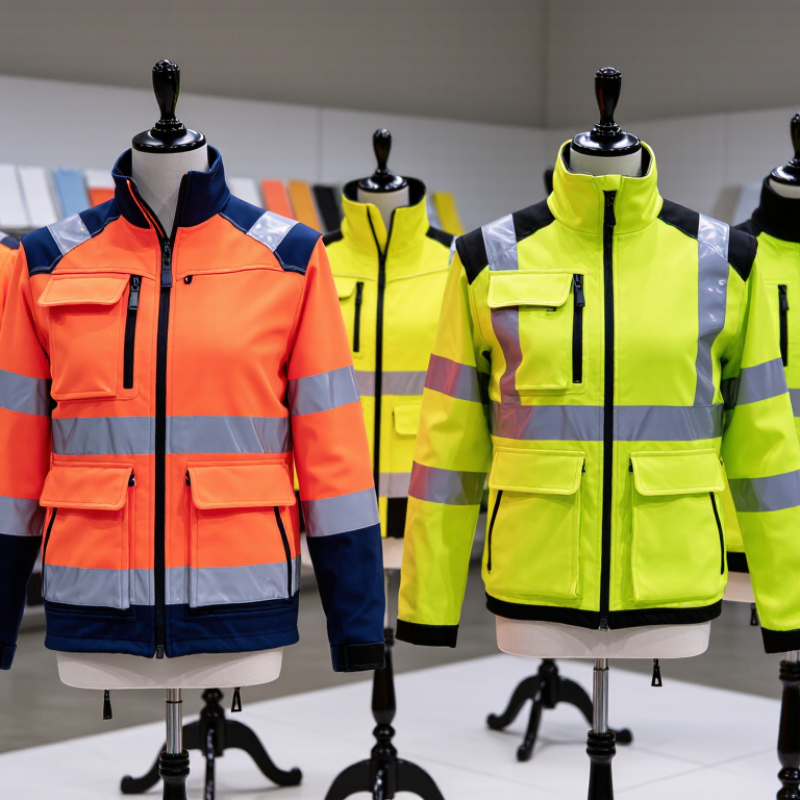
Safety jackets serve different hazards, climates, and work routines. High-visibility jackets help road crews, warehouse teams, and airport workers remain noticeable near moving vehicles. Their reflective bands should stay visible after repeated washing. Bright fabric alone is not enough.

Waterproof jackets suit port operations, construction sites, and outdoor logistics in wet regions. Insulated versions protect workers in cold storage areas and northern field projects. Flame-resistant jackets support welding and heat-exposed work when risk assessments require them. Chemical-resistant designs may protect laboratory and industrial staff, but material compatibility must be verified carefully. No jacket solves every hazard. I have seen buyers choose thick fabric, then overlook heat stress and restricted movement. That mistake deserves attention.

Tips: Match the jacket to the hazard, climate, and wearing time. Check seam construction, zipper protection, cuff adjustment, and washable visibility. Ask manufacturers for test reports, fiber details, sizing data, and care instructions. Global buyers should compare local requirements before placing large orders. One certificate may not satisfy every market. Trial samples in real working conditions are more reliable than catalog photos. Even experienced teams can miss pocket placement or poor ventilation. Worker feedback should influence the final specification.

How to Evaluate Materials, Compliance, and Product Quality

For global buyers, a safety jacket should be judged by evidence, not bright color alone. The International Labour Organization reported about 2.93 million work-related deaths and 395 million non-fatal injuries in 2023. That makes visibility, fit, and durability practical purchasing concerns. Ask manufacturers for fabric composition, reflective tape performance, seam strength, and washing results. A jacket that looks visible under showroom lighting may fail beside headlights, rain, or dust.

Materials need testing against the destination market’s requirements. EN ISO 20471 evaluates high-visibility clothing, while ANSI/ISEA 107 covers design and performance in the United States. These standards address background material, retroreflective performance, color, and garment configuration. Request current laboratory reports, scope details, and sample identification. Check whether the report covers the exact model, not merely similar fabric. Small differences matter. A missing sleeve band can change the classification.

Quality control should continue after production. Inspect random jackets for broken stitching, uneven tape, zipper failure, and measurement changes after washing. The Hohenstein Textile Exchange Material Change Index has shown how fiber and processing choices can affect environmental performance, but sustainability claims still need verification. This part is often overlooked. I would also test three samples from separate production batches, because one perfect sample proves little. Reliable manufacturers share corrective-action records, traceable batch numbers, and clear care labels. Claims without records deserve caution.

2026 Top Safety Jacket Manufacturers for Global Buyers? — How to Evaluate Materials, Compliance, and Product Quality

A practical, brand-neutral evaluation matrix for comparing safety-jacket manufacturers, factories, and private-label suppliers across international markets.

Evaluation Dimension What to Check Evidence or Technical Data to Request Buyer Evaluation Benchmark Relevant Standard or Reference Suggested Weight
Shell Fabric Fiber composition, fabric weight, weave, abrasion resistance, colorfastness, and intended climate. Technical data sheet stating fiber content and mass per unit area; laboratory results for abrasion, tear strength, tensile strength, and colorfastness. High priority
Use fabric weight and performance data that match the work environment rather than selecting by appearance alone.
EN ISO 13688:2013+A1:2021; ISO 13688:2013 15%
High-Visibility Performance Fluorescent background material, retroreflective tape, contrast material, visibility area, and configuration. Valid test report identifying the exact fabric, tape, garment design, size range, and care condition used for testing. Required where applicable
Confirm the garment class or type required by the destination market and risk assessment.
ISO 20471:2013+A1:2016; ANSI/ISEA 107-2020 15%
Retroreflective Tape Reflective performance, width, placement, durability, flexibility, and resistance to repeated laundering. Retroreflective coefficient results, wash-cycle test conditions, tape specification, supplier declaration, and sewing or heat-application method. High priority
Tape must remain securely attached and visibly functional after the care cycle specified for the garment.
ISO 20471:2013+A1:2016; ANSI/ISEA 107-2020; ISO 6330 laundering procedures 12%
Weather Protection Water penetration, water-vapor resistance, seam sealing, wind protection, and breathability. Hydrostatic pressure or water-penetration results, water-vapor resistance data, seam-sealing specification, and construction drawings. Application dependent
For rainwear, require performance data for the complete finished garment, not only the laminate or fabric.
EN 343:2019 for protective clothing against rain; EN ISO 13688:2013+A1:2021 12%
Thermal Protection Insulation, lining, fill material, thermal comfort, cold-weather mobility, and heat retention. Insulation composition and mass, thermal resistance data, garment design details, and temperature or comfort test methodology. Application dependent
Match insulation and layering to the expected temperature range; avoid making temperature claims without test evidence.
EN 342:2017 for protection against cold; EN 14058:2017 for cool environments 10%
Flame and Heat Resistance Limited flame spread, heat exposure, molten-metal hazards, and whether the garment is inherently or chemically flame resistant. Certification or test report for the exact garment construction; fiber and finish disclosure; after-wash performance; care-label requirements. Risk specific
Do not treat ordinary polyester or high-visibility fabric as flame-resistant without applicable test evidence.
ISO 11612:2015; EN ISO 14116:2015; NFPA 2112-2023 where applicable 10%
Antistatic or Electrical Properties Surface resistance, charge decay, conductive fibers, and suitability for explosive atmospheres or electrical work. Test report for the finished garment, material composition, grounding or bonding instructions, and limitations of use. Risk specific
Antistatic protection is not the same as arc-flash protection; require a separate electrical-hazard assessment.
EN 1149-5:2018; IEC 61340-5-1:2016 for electrostatic-control programs 8%
Arc-Rating Claims Arc thermal performance value, garment system, layer compatibility, closure design, and exposed-skin limitations. Independent arc-flash test report, ATPV or Ebt rating where applicable, product identification, and user instructions. Electrical work only
Use only when the garment is designed and tested for the applicable arc-flash hazard category.
ASTM F1506-22; ASTM F2621-19; NFPA 70E-2024 8%
Garment Construction Seam strength, stitch density, bar-tacks, zipper quality, pocket security, ventilation, closures, and ergonomic fit. Pre-production sample, construction specification, seam-strength results, bill of materials, approved trim list, and graded size patterns. High priority
Inspect stress points and functional features on a size range, not only on a single sample.
EN ISO 13688:2013+A1:2021; buyer-approved workmanship specification 10%
Sizing and Ergonomics Body measurements, sleeve mobility, layering allowance, gender or body-shape coverage, and adjustment options. Measurement chart, tolerance table, fit samples, size-set approval, movement assessment, and documented pattern revisions. Operational priority
Require dimensional tolerances and approval of a complete size set before bulk production.
EN ISO 13688:2013+A1:2021; ISO 3635:1981 for size designation principles 5%
Chemical and Restricted Substances Colorants, formaldehyde, extractable metals, PFAS-related chemistry, and restricted substances in fabric and trims. Current laboratory screening linked to the exact material lot or style; chemical inventory; declarations for coatings, prints, and finishes. High priority
Define destination-market restrictions contractually and verify materials through independent testing.
REACH Regulation (EC) No 1907/2006; OEKO-TEX Standard 100 criteria where specified by the buyer 5%
Quality Management Incoming inspection, in-line controls, final inspection, nonconformance handling, traceability, and corrective action. Quality manual, inspection plans, sampling level, calibration records, CAPA examples, lot traceability, and production records. High priority
Prefer documented controls based on ISO 9001 principles and a defined acceptance-quality limit.
ISO 9001:2015; ISO 2859-1:1999 for attribute-sampling plans 10%
Compliance Documentation Declaration of conformity, technical file, user information, marking, labeling, and market-specific documentation. Signed declaration where required, technical documentation, care label, user instructions, test reports, and product traceability records. Mandatory for regulated markets
Documents must identify the exact model and tested configuration; generic certificates are insufficient.
Regulation (EU) 2016/425 for EU personal protective equipment; ANSI/ISEA 107-2020 for high-visibility apparel 10%
Production Capacity and Consistency Monthly capacity, critical-material availability, lead time, change control, and ability to reproduce approved samples. Capacity plan, production schedule, approved sample record, material reservation process, subcontractor disclosure, and batch consistency data. Commercial priority
Evaluate consistency across at least two production lots before making long-term sourcing commitments.
ISO 9001:2015 principles; buyer-specific production-control requirements 5%
After-Sales and Traceability Complaint response, recall readiness, spare components, warranty terms, and retention of test and production records. Written warranty policy, complaint-response timeline, lot or batch coding, recall procedure, and record-retention policy. Risk-management priority
Require a traceable link between finished garments, material lots, test reports, and shipment records.
ISO 9001:2015; applicable product-safety and market-surveillance requirements 5%

Use of this matrix: Score each supplier from 1 to 5 for every dimension, multiply by the suggested weight, and verify all risk-specific requirements before purchase. Standards and regulations should be confirmed against the destination market, product type, publication status, and latest official edition before certification or import.

Leading Manufacturer Selection Criteria for International Buyers

For international buyers, a top safety jacket manufacturer must prove performance, not only display attractive samples. Check whether each garment matches EN ISO 20471 or ANSI/ISEA 107-2020 requirements. Request current test reports, fabric composition, reflective tape specifications, and production-batch traceability. The International Labour Organization estimated nearly three million work-related deaths annually in its 2023 global estimates. Visibility equipment therefore deserves serious technical review.

Factory capability matters as much as certification. Experienced buyers should inspect sewing quality, seam reinforcement, color consistency, and washing durability. Ask for inspection records and independent factory-audit results. For road crews, compare visibility classes, weather resistance, breathability, and night-time reflectivity. The World Health Organization’s Global Status Report on Road Safety 2023 records about 1.19 million annual road deaths, reinforcing the need for reliable roadside protection. Small details matter.

Demand evidence.

A capable supplier should explain lead times, minimum order quantities, replacement policies, and customs documentation clearly. Samples should be tested after repeated washing, not only measured when new. Some manufacturers provide excellent certificates but weak production control. I have seen buyers overlook this gap. It is an uncomfortable mistake. Regional climate, worker movement, and layering habits can also change the correct design. Price should be compared with service life, not purchase cost alone. No checklist is perfect; documented communication and repeat inspections remain essential for global sourcing.

Ordering, Customization, and Global Supply Considerations

Global buyers choosing safety jacket manufacturers in 2026 should examine ordering controls, customization depth, and supply reliability. The International Labour Organization reported nearly three million work-related deaths and 395 million non-fatal injuries annually in its 2023 estimates. Visibility garments cannot prevent every incident, but correct performance matters.

Ask manufacturers for certified test reports before approving samples. EN ISO 20471 and ANSI/ISEA 107-2020 define visibility, color, reflective material, and garment classification requirements. Confirm test methods, fabric composition, washing durability, and production-batch traceability. Do not rely on attractive sample photography. It proves very little.

Customization should cover fabric weight, pocket layout, reflective tape width, closures, sizing, and climate adaptation. A lightweight mesh jacket may suit tropical construction sites, while insulated layers support colder logistics work. Request a pre-production sample with actual trims and printed markings. Fit mistakes become expensive at scale. They also delay delivery.

For ordering, share size ratios, target quantities, packaging rules, inspection standards, and required delivery windows in one technical sheet. The 2024 World Bank Logistics Performance Index highlights major differences in customs efficiency, infrastructure, and shipment reliability across markets. Buyers should therefore compare lead times, backup material sources, and port options rather than unit prices alone. A factory may offer excellent stitching yet struggle with reflective tape shortages. That risk deserves written mitigation.

Supplier audits should review worker training, quality records, chemical controls, and corrective-action history. Independent inspection can verify random measurements and reflective performance before shipment. Still, audits are snapshots, not guarantees. A second inspection is sometimes worth the cost.

FAQS

What defines a top safety jacket manufacturer in 2026?

Verified performance matters more than attractive catalogs. Look for fabric certificates, seam tests, colorfastness records, and visibility checks after washing.

How can buyers verify production quality?

Request dated inspection records and samples from the same production line. Ask how batches are identified. Plain explanations are a good sign.

Which jacket features suit cold workplaces?

Cold-site jackets need insulation, adjustable cuffs, and secure pockets. The lining should allow movement during long shifts. Thick fabric alone is insufficient.

What features help workers in hot climates?

Choose lightweight mesh, vented backs, and quick-drying fabric. Test comfort during real shifts. Mannequins cannot show heat stress.

When are high-visibility jackets appropriate?

They help road crews, warehouse teams, and airport workers near moving vehicles. Reflective bands must remain visible after repeated washing. Bright fabric is not enough.

How should buyers choose protective jacket types?

Match protection to the documented hazard and climate. Verify material compatibility for chemical exposure. Use flame-resistant garments only when risk assessments require them.

What should a reliable supplier communicate before shipment?

It should confirm lead times, measurement tolerances, pre-production samples, and design changes. Independent inspections should be accepted. Delays should be reported early.

Why should buyers test samples in real working conditions?

Catalog photos can hide poor ventilation, awkward pockets, weak zippers, and restricted movement. Workers reveal problems quickly. Some decisions may still need revision.

Why should buyers question extremely low prices?

Very low quotes may indicate thinner fabric, rushed stitching, or limited support. Compare test records, construction details, and realistic delivery dates.

What should workers inspect during jacket trials?

Check pocket placement, cuff adjustment, zipper protection, ventilation, and visibility in rain. Worker feedback should influence the final specification. Mistakes happen.

Conclusion

In 2026, a top Safety Jacket manufacturer is defined by consistent product quality, reliable production capacity, strong technical expertise, and a clear commitment to worker protection. Manufacturers should offer a broad range of safety jackets for construction, road maintenance, logistics, industrial operations, outdoor work, and emergency support. Key product differences may include high-visibility jackets, weather-resistant designs, insulated versions, lightweight options, and specialized garments for demanding work environments.

International buyers should carefully evaluate fabric durability, visibility performance, stitching, reflective materials, sizing, comfort, and documented compliance with applicable safety requirements. Selection should also consider customization capabilities, sample approval, quality-control procedures, minimum order quantities, lead times, packaging, and communication efficiency. A dependable supplier should provide transparent specifications, stable production, flexible branding options, and practical global shipping support. By reviewing materials, testing records, production standards, and after-sales service together, buyers can choose a manufacturer that delivers safe, functional, and cost-effective jackets for long-term international use.

Sienna

Sienna

Sienna is a skilled marketing professional with a deep expertise in our company’s core products and services. With a passion for innovation and detail, she plays a pivotal role in crafting insightful blog posts that not only highlight the unique features of our offerings but also provide valuable......